

Have you thought about using exterior paint indoors? It might seem like a smart way to use up leftover paint. But, is it safe and effective? Exterior paint is made for the outdoors, not our homes.
We’ll look at the dangers of using exterior paint inside. This includes health risks and how it might not work well. By the end, we’ll know if it’s a good idea for our next painting project.

Understanding the Differences Between Interior and Exterior Paint
When we talk about interior vs exterior paint, we see their unique traits. The makeup of paint is key to how each type works in its place. It affects looks, function, and how long it lasts.
Composition and Formulation
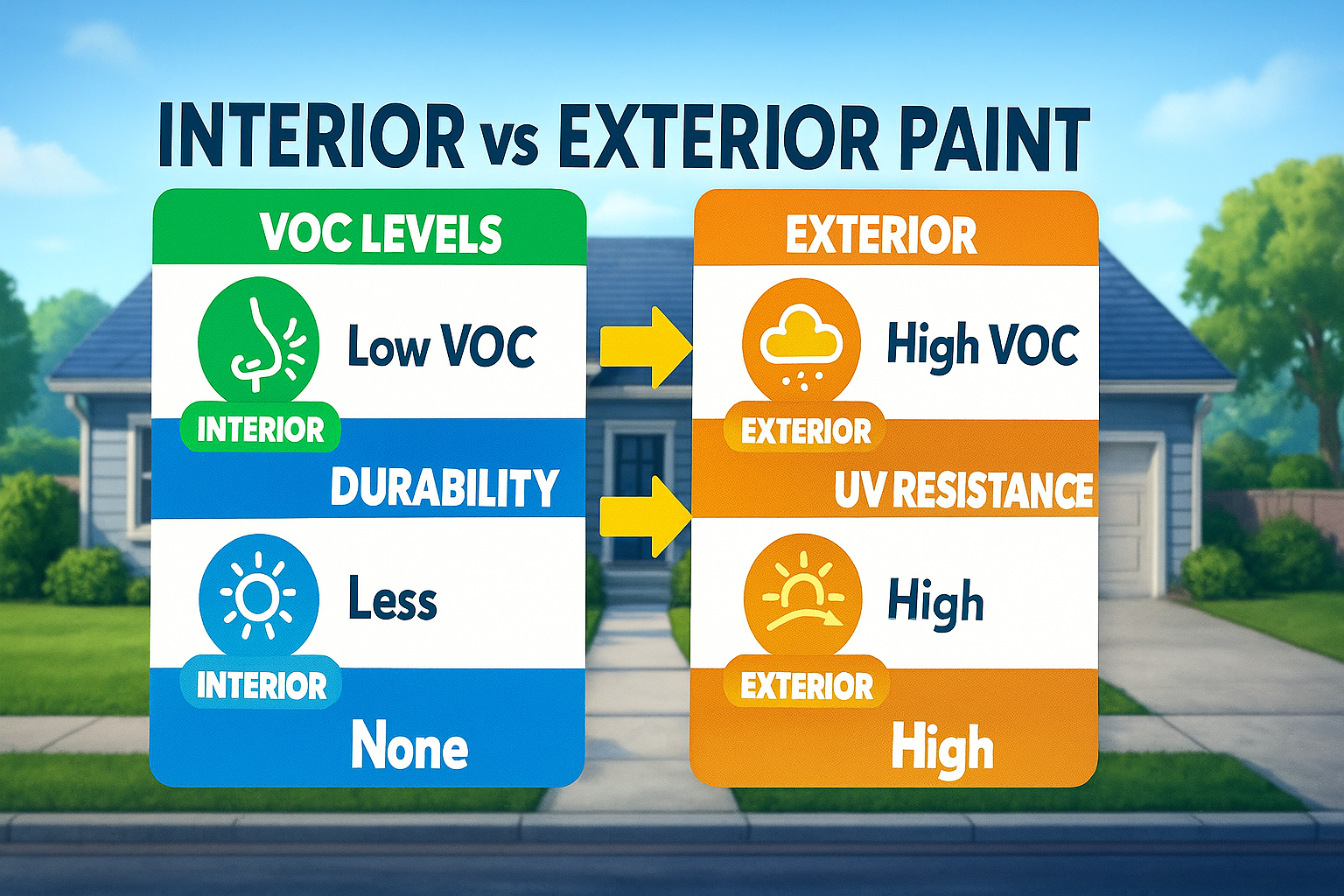
Interior paints have fewer harmful chemicals, or VOCs, than exterior paints. This makes them safer in closed spaces. They also have special ingredients to stop marks and color loss from indoor lights.
Exterior paints, though, have more VOCs to fight off bad weather, sun, and mold. This makes them last longer outside. But, they don’t stick as well to surfaces like drywall inside, leading to problems like peeling.
Durability and Performance
Exterior paint is much more durable than interior paint outside. It stands up to rain, sun, and changing temperatures. But, it doesn’t stick well to surfaces like drywall inside. This can cause issues like peeling and cracking, hurting our home’s looks.

Why You Should Not Use Exterior Paint Inside
We often think paint is a simple choice. But using exterior paint indoors has serious risks. It can expose us to high levels of volatile organic compounds (VOCs). These can cause eye, nose, and throat irritation, headaches, and nausea.
Long-term exposure can harm our central nervous system even more.
Health Risks of Using Exterior Paint Indoors
Using exterior paint indoors poses health risks. The VOCs it releases can stay in our homes. This can affect our comfort and health.
Knowing these risks helps us make better choices for our homes.
Performance Issues with Exterior Paint
Exterior paint doesn’t work well indoors. It doesn’t stick well to indoor surfaces, leading to bad finishes. *Using exterior paint indoors risks* it drying slowly, making painting harder.
We want our paint to apply smoothly and last long. Exterior paint doesn’t meet these needs indoors.

What Makes Exterior Paint a Poor Choice for Indoor Use
Choosing the right paint for our indoor spaces is key for looks and health. Exterior paint might seem like a good choice, but it has big downsides indoors. Its chemical makeup and how it reacts with indoor air are major concerns.
Higher Levels of Volatile Organic Compounds (VOCs)
Exterior paint has more VOCs, which are harmful chemicals. These can really hurt our indoor air quality by releasing bad fumes for a long time. This can last months or even years, making our homes unhealthy.
We need to think about the dangers of being around these VOCs for a long time. This is even more true in places where it’s hard to get fresh air.
Deterioration and Adhesion Problems
Using exterior paint indoors brings big problems, like adhesion issues. It’s made for the outdoors, not for the smooth surfaces inside our homes. This can cause the paint to peel and flake, ruining the look of our spaces.
These problems not only make our homes look bad but also mean we have to paint more often. This costs us more money over time.

Risks of Using Exterior Paint Indoors
Using exterior paint indoors can harm our health. It’s important to know the risks. Exterior paint often contains volatile organic compounds (VOCs) that can be harmful.
Potential Health Effects from VOCs
VOCs in paint can cause serious health problems. They release harmful gases into the air when paint dries. This can lead to headaches, dizziness, and eye and throat irritation.
Long-term exposure can cause even more serious issues. These include chronic respiratory problems. People with weaker immune systems are at higher risk.
Long-Term Consequences of Prolonged Exposure
Long-term exposure to VOCs can cause chronic health issues. Breathing in these gases over time can lead to serious problems. This includes an increased risk of blood disorders and cancer.
It’s vital to choose paints that are safe for indoor use. Knowing the risks helps us make better choices for our health.

Can You Use Exterior Paint Indoors? The Short Answer
The short answer is clear: don’t use exterior paint indoors. Experts say it’s not safe or effective for inside use. Exterior paint may handle moisture well, but it’s not good for our homes.
Interior paints are made for indoor use. They are designed to work well in closed spaces and are safer for us. Using exterior paint indoors can harm our health and homes.
It’s best to choose interior paints made for indoor use. They look better and make our homes safer and healthier. Using the right paint is key for a good look and a safe home.

What to Do If You Accidentally Used Exterior Paint Inside
Accidentally using exterior paint indoors can be scary. We must act fast to avoid harm. First, we need to open windows and use fans to improve air flow. This helps reduce harmful chemicals in the air.
Immediate Actions to Mitigate Risks
Our safety is the top priority. We should wear masks and gloves to protect ourselves from toxic fumes. This way, we can deal with the situation calmly and safely.
How to Safely Remove or Cover Exterior Paint
After making sure the area is well-ventilated and we’re safe, we can remove the paint. If it’s dry, applying a good interior primer is key. It seals the surface well.
After the primer dries, we can repaint with the right interior paint. This makes our space safe and looks good again.
Exploring Limited Exceptions for Using Exterior Paint Indoors
We generally advise against using exterior paint indoors. Yet, there are exceptions for exterior paint indoors we can consider. Certain situations make exterior paint a good choice for indoor use. Knowing suitable areas for exterior paint helps us make better decisions.
Suitable Areas for Exterior Paint
Some areas in our homes or facilities are better suited for exterior paint. This includes:
- Garages
- Workshops
- Utility rooms
These places often face a lot of wear and tear. Exterior paint’s durability can be a big plus here. It creates a strong surface that can handle many challenges.
When to Consider Exterior Paint for Indoor Applications
In damp places like basements and bathrooms, exterior paint might be beneficial. It can fight mold and mildew. But, we must ensure good air flow after applying it. This careful approach can lead to successful interior applications that meet specific needs safely.
Choosing the Right Paint for Your Projects
Choosing the right paint for our home projects can make a big difference. Quality interior paints ensure a finish that looks great and lasts. They resist stains, scrubbing, and fading well.
These paints also stick well to surfaces, keeping your home looking beautiful for longer.
Identifying Quality Interior Paints
When searching for quality interior paints, consider a few important factors. Look for paints that:
- Have low levels of VOCs for better indoor air quality.
- Offer various finishes, from matte to glossy, to suit different tastes.
- Provide excellent coverage, needing fewer coats.
Also, check for certifications and recommendations from trusted sources. This helps make sure you’re choosing the right paint.
Benefits of Using the Right Paint
Using high-quality interior paints has many benefits. They not only make our homes look better but also improve our health. Quality paints:
- Last longer, needing less frequent touch-ups.
- Reduce exposure to harmful chemicals found in lower-quality paints.
- Create a more pleasant living space that reflects our style.
By choosing quality interior paints, we invest in a home that truly feels like our own.
Conclusion
Using exterior paint indoors comes with big risks. It can harm our health because of high levels of volatile organic compounds (VOCs). Also, it might not work well over time, leading to poor results.
It’s important to know that being around these substances for a long time can hurt our homes and our health. We need to think carefully about what we use inside our homes.
Choosing the right paint is key to keeping our homes looking good and safe. Interior paints are made to last and look great without harming us. By picking the right paint, we can make our homes beautiful and safe.
We should avoid using exterior paint indoors because it’s not safe. Instead, we should choose paints made for inside use. This way, we can make our homes beautiful and safe for us.