

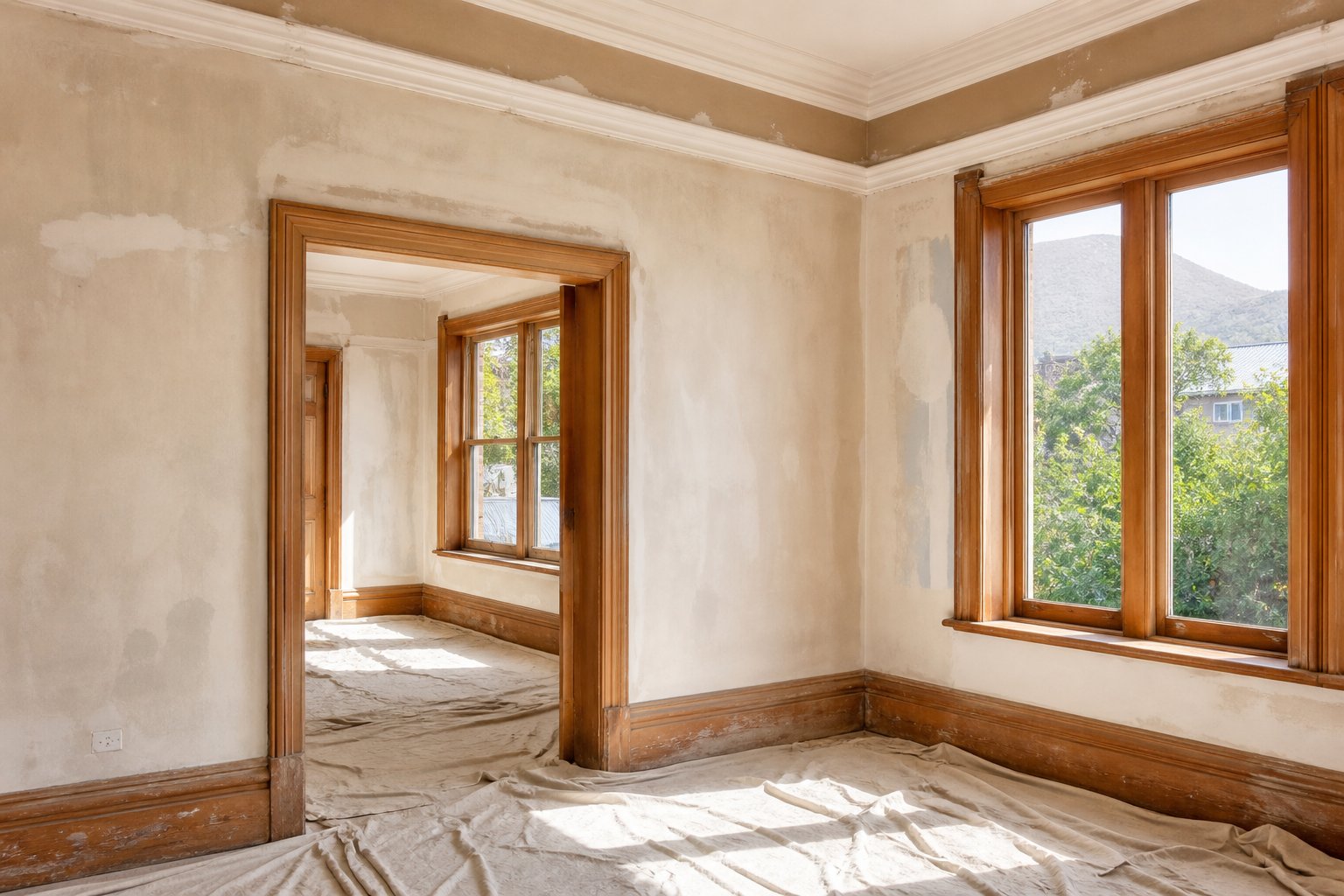
Painting an older Cape Town home often begins with detective work. Cracks, powdery plaster, flaking layers and damp marks each point to a different cause, and covering them too quickly can lead to another failure. A sound result depends on understanding the wall beneath the paint, dealing with moisture and preserving the details that give the building its character.
Start with the building, not the colour chart
Homes in older Cape Town suburbs may have been altered and repainted many times. One room can contain original lime-rich plaster, later cement patches, filler, enamel trim and several generations of wall paint. Outside, wind-driven rain, strong sun and salt-laden air near the coast add further wear.
A pre-paint inspection should map the condition of each surface. Look for hollow plaster, fine map cracking, wider moving cracks, bubbling paint, white salt deposits, mould, rust stains and previous repairs. The pattern matters. Peeling low down on a wall may suggest rising or lateral moisture, while a local stain below a gutter points elsewhere.
Moisture should be traced before cosmetic work starts. Paint is not a cure for a leaking pipe, failed flashing or water entering through an unsealed joint. CDC Painters provides damp proofing in Cape Town, but a plumber, roofer or other specialist may be needed where the source falls outside painting and damp treatment.
Old plaster needs the right repair approach
Older plaster is not always compatible with a hard, dense repair material. Traditional lime-rich plaster can accommodate small amounts of movement and allows moisture vapour to pass through. A strong cement patch placed into a softer wall may create a rigid island. Cracks can then form around the edge, and moisture may be pushed into the surrounding plaster.
Loose or hollow areas need to be identified rather than skimmed over. Small stable defects may only require local preparation and filling. Larger areas of detached plaster may need removal and reinstatement with a compatible mix. The cause of a crack also matters: a dormant surface crack calls for a different repair from one that continues to move. Structural movement should be assessed by a suitably qualified professional before painting proceeds.
New cementitious plaster is alkaline and retains moisture while curing. Coating it too soon can cause discolouration, poor adhesion or blistering. The plaster should be allowed to cure and dry in line with the coating manufacturer’s instructions, then receive the specified primer. CDC’s crack repair and plaster preparation service covers the surface work that must happen before a decorative coat can perform properly.
Identify previous coatings before sanding or painting
Old paint layers do not all behave alike. A chalky water-based coating, glossy enamel, limewash and modern acrylic each need different preparation. Adhesion is only as strong as the weakest layer in the stack. If an old coat releases from the plaster, a new premium topcoat will come away with it.
| What you find | What it may mean | Sensible next step |
|---|---|---|
| Fine powder on a rubbed surface | Chalking paint, limewash or a friable layer | Clean and test the surface; use a compatible bonding or stabilising system if specified |
| Hard, glossy paint | Enamel or another low-porosity coating | Degrease, dull the sheen and apply the correct adhesion primer |
| Many brittle, peeling layers | Loss of adhesion within the old coating build-up | Remove unsound material to a firm edge before priming |
| Bubbles or salt deposits | Moisture moving through the wall | Find and correct the moisture source before repainting |
| Unknown coating on a very old surface | Possible hazardous material or incompatible coating | Test before aggressive sanding, heating or stripping |
Small adhesion tests can reveal whether a proposed system bonds to the prepared surface. A test patch is also useful when the wall has an unknown sealer or a very smooth old enamel. Where old paint may contain lead, avoid uncontrolled dry sanding, burning or heat stripping. Arrange suitable testing and use a contractor or specialist with the right containment and disposal method.
Damp, salts and breathability
Older masonry walls can hold and release moisture differently from modern cavity walls. Dense coatings sometimes trap moisture behind the paint film. The pressure and salts left by evaporation can cause blistering, flaking and a powdery surface. Repainting without addressing that cycle merely hides it for a while.
The correct response depends on the moisture path and wall construction. It may involve repairs to gutters or exterior joints, improved drainage, damp treatment, removal of contaminated plaster or a more vapour-permeable coating system. No single “damp paint” solves every case. A surface should be dry enough for the specified product, with salt contamination treated as directed by the manufacturer.
Exterior walls also need weather-focused preparation. Failed sealant, open cracks and friable paint should be dealt with before the finish coats. See CDC’s exterior painting services for the typical scope of wall preparation and coating work.
Protect joinery, mouldings and heritage character
Older houses often have timber sash windows, panelled doors, decorative plaster bands, cornices, ceiling roses, vents and metalwork worth retaining. Heavy sanding can soften moulding profiles. Thick paint build-up can stop sash windows moving and fill the crisp lines around panels. Preparation should remove loose material without erasing sound historic detail.
Timber needs close attention at joints, end grain and glazing lines, where water often enters first. Rotten wood is not restored by filler and paint alone. The failed section must be repaired appropriately before priming. Ferrous metal should be cleaned of loose rust and coated with a compatible anti-corrosive primer and finish system.
If a property is protected, lies in a heritage area or is old enough to trigger heritage controls, changes to colours, finishes or architectural details may require approval. Confirm the requirements with the City of Cape Town and Heritage Western Cape before altering significant elements. Painting like-for-like is not always the same as stripping original material or changing a facade.
Plan the work in a sequence that lasts
A practical sequence starts with moisture and building repairs, followed by plaster and crack work. Surfaces are then cleaned, allowed to dry, prepared and spot-primed where needed. Only after those stages should full primers and finish coats be applied according to the chosen system.
Interior work needs the same discipline. Kitchens may have grease or old enamel; bathrooms may have condensation and mould; living rooms may have fragile old plaster. CDC’s interior painting service and broader painting services in Cape Town can be scoped around the actual condition of each area rather than treating the whole house as one uniform surface.
Ask for the quotation to distinguish preparation, repairs, primers and finish coats. If the inspection uncovers uncertain damp, hazardous old paint or structural movement, allow time for testing or specialist advice. That pause is cheaper than repeating a failed coating system.
Frequently asked questions
Can old paint simply be painted over?
Only if it is clean, sound, compatible and properly prepared. Loose, chalking or poorly bonded layers must be removed or treated as part of a specified system. A small adhesion test can help where the old coating is unknown.
Should every crack be opened and filled?
No. The repair depends on the crack’s width, depth and whether it is still moving. Recurrent or significant cracks may need investigation before any filler or paint is applied.
Is breathable paint always required on an old house?
Not automatically. Wall construction, existing coatings and moisture conditions determine what is suitable. A vapour-permeable system may help on some traditional walls, but it cannot compensate for an active leak or saturated plaster.
Can CDC Painters assess an older Cape Town property?
CDC Painters can assess the painting, plaster preparation, crack and damp-related scope. Where structural movement, hazardous coatings or specialist heritage work is suspected, the relevant professional should assess that part. Use the contact page to arrange a discussion about the property.
More practical exterior and preparation guides
Continue with closely related guidance, then review the relevant Cape Town service page.
Discuss your painting requirements
Review CDC Painters services or request a project-specific quotation.