

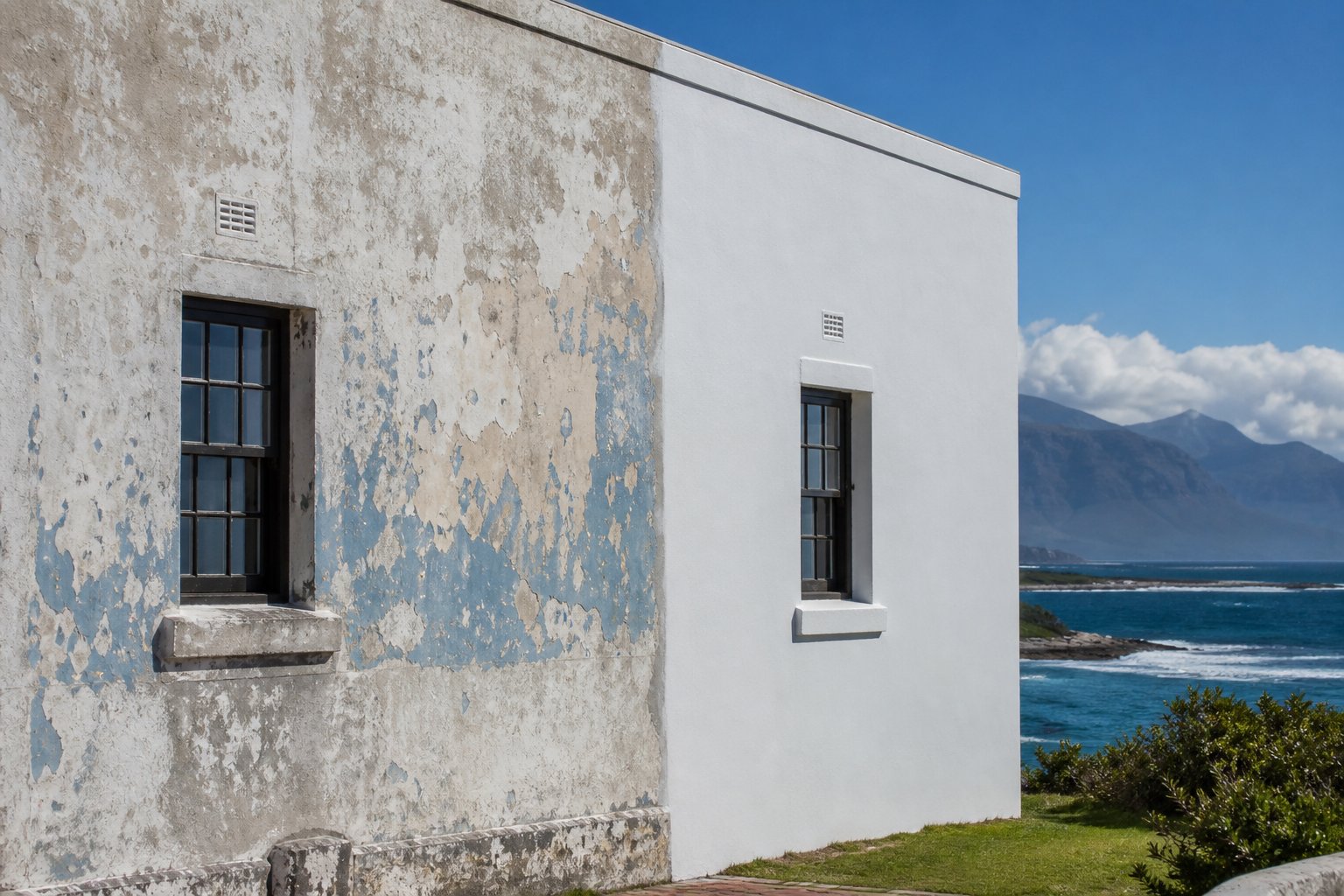
Exterior paint near the Cape Town coast works under harder conditions than paint on a sheltered inland wall. Sea salt, strong sunlight, wind-driven rain and frequent wet-dry cycles all act on the same coating. When the surface beneath it is weak, damp or contaminated, failure can appear much sooner than expected. The answer is rarely a thicker final coat. It starts with understanding the exposure and preparing each surface properly.
Coastal exposure is not the same on every property
A house does not need to stand directly on the beachfront to experience coastal conditions. Salt-bearing air and wind can reach properties farther inland, although the level of exposure varies. A west-facing wall with little shelter may weather differently from a protected courtyard wall on the same property. Upper storeys, parapets, fascias, gates and corners can also receive more wind and rain than lower, recessed areas.
This uneven exposure explains why one elevation may fade, chalk or peel while another still looks sound. A useful assessment considers orientation, shade, nearby vegetation, prevailing weather, roof drainage and the condition of each substrate. A blanket specification for the whole building can miss local problem areas. CDC Painters’ exterior painting services cover preparation and coating of outside surfaces in Cape Town, with the paint system chosen around the actual condition of the property.
Salt residue weakens adhesion
Fine salt residue can settle on walls, metalwork and trim. It may be difficult to see, especially when mixed with ordinary dust. If paint is applied over this contamination, it bonds to the residue rather than to a clean, stable surface. The coating may then lift, blister or flake as moisture moves through the wall or as weather stresses the weak bond.
Salt is also hygroscopic, which means it attracts moisture from the air. A contaminated surface can therefore stay damp for longer than it appears to. On masonry, moisture movement may bring additional salts through the plaster and leave white, powdery deposits called efflorescence. These deposits should not simply be brushed off and painted over. The source of moisture needs assessment, and the wall must be clean, sound and suitably dry before coating.
Washing is an important part of coastal preparation, but it is not a substitute for diagnosis. The contractor still needs to find loose paint, friable plaster, mould, algae, rust and active damp. Where moisture is present, damp-proofing work may be needed before a decorative finish can perform properly.
Sun, wind and rain stress the coating
Cape Town’s strong ultraviolet exposure gradually breaks down exterior paint. Colour can fade, and the surface may become chalky as the binder degrades. Dark colours and highly exposed elevations can show weathering differently from pale or shaded walls. Once a surface is chalking, new paint will not adhere reliably unless the loose powder is removed or stabilised with the correct preparation system.
Wind adds abrasion from dust and sand, while also driving rain into cracks, joints and porous plaster. Winter rain can enter through a failed parapet, an open crack, a leaking gutter or deteriorated sealant. The wall may then dry toward the outside. If a relatively impermeable coating blocks that path, pressure can develop behind the film and cause bubbles or peeling.
Repeated expansion and contraction also matters. Masonry, timber and metal respond differently as temperatures change. Hairline cracks may open, timber joints may move, and metal can begin rusting where its protective coating has been damaged. These surfaces need their own primers and preparation methods rather than one universal product.
Preparation failures that show up later
Early paint failure is often blamed on the topcoat, even though the weak point lies underneath. A fresh finish can hide defects for a short time, which is why a rushed job may look acceptable at handover. Problems return once sun, salt and rain act on the coating.
| Preparation problem | Likely result | What should happen first |
|---|---|---|
| Salt, dust or chalk left on the wall | Poor adhesion and flaking | Clean and test the surface before priming |
| Loose old paint coated over | New and old layers detach together | Scrape and sand back to a firm edge |
| Active damp ignored | Blistering, staining or repeat peeling | Trace the moisture source and allow drying |
| Cracks filled only at the surface | Cracks reopen and admit water | Assess the crack and repair it appropriately |
| Rust covered with wall paint | Rust staining and coating breakdown | Prepare the metal and use a suitable primer |
| Mould or algae painted over | Contamination returns and adhesion suffers | Treat and remove growth before coating |
Cracks and failed plaster deserve particular attention because they can admit water behind an otherwise sound coating. The appropriate repair depends on the width, depth and cause of the defect. CDC Painters provides crack repair and plaster preparation as part of getting affected surfaces ready for painting. Movement or signs of a structural problem should be assessed by the relevant specialist before cosmetic work continues.
Coastal metal, timber and roof surfaces need separate systems
Exterior walls are only part of the maintenance picture. Salt and moisture can speed up corrosion on gates, railings, fixings and other exposed metal. Rust must be removed to a suitable standard, and bare areas need the correct corrosion-resistant primer before finishing. Painting directly over rust may improve the colour briefly, but it does not create a stable base.
Timber fascias, doors and window frames absorb and release moisture. Split joints, exposed end grain and failed sealant allow water in, while strong sun dries and stresses the surface. Sound timber should be cleaned, sanded and primed with a compatible system. Rotten or badly damaged timber may need repair or replacement before painting.
Roofs, flashings and parapets can also feed moisture into exterior walls. Peeling below a roofline is a reason to inspect above the damaged patch rather than repaint the patch alone. Where the roof coating itself needs attention, see CDC Painters’ roof painting service. Active leaks or defective roof components may require a roofing or waterproofing specialist before painting starts.
What a sound repainting process should include
A coastal repaint should begin with a close inspection of the substrate, not a colour chart. The scope may include washing, removing salt and chalk, scraping loose coatings, sanding firm edges, treating biological growth, repairing plaster and cracks, preparing rusted metal, and priming bare or unstable areas. The exact sequence depends on what the inspection finds.
Surfaces also need suitable weather and drying time. Paint applied to a damp wall, in mist or shortly before rain may not cure as intended. High wind can carry dust onto wet paint and make application difficult. Scheduling work around a workable weather window is therefore part of the specification, especially on exposed elevations.
Property managers planning work across a block or shared development may need phased access, a clear scope and consistent preparation standards. CDC Painters handles body corporate painting in Cape Town for common and exterior areas. Homeowners and managers can also request an assessment when peeling, chalking, damp or cracking needs to be understood before repainting.
Frequently asked questions
Does sea air make exterior paint peel?
Sea air can contribute to early failure because salt residue contaminates surfaces and attracts moisture. Peeling usually involves more than salt alone, however. Poor preparation, damp, unstable old paint, cracks or the wrong primer often combine with coastal exposure.
Can I paint over chalky exterior paint?
Not without preparation. Chalking leaves a loose powder that prevents the new coating from bonding to a firm surface. The wall should be cleaned and assessed, then stabilised or primed where the condition requires it.
Why is only one side of my house fading or peeling?
Different elevations receive different amounts of sun, wind, rain and salt. A highly exposed or weather-facing wall can deteriorate sooner than a shaded courtyard wall. Local leaks, cracks or damp can make the difference more pronounced.
Will premium paint fix a coastal moisture problem?
No paint can correct an active source of moisture. The water entry or damp mechanism should be identified first. Once the wall is suitably dry and sound, the primer and topcoat can be selected for the substrate and exposure.
Should exterior walls be washed before repainting?
Coastal walls generally need thorough cleaning to remove salt, dust, chalk and biological contamination. Cleaning must be appropriate to the substrate, and the surface must dry before the next stage of preparation and coating.
More practical exterior and preparation guides
Continue with closely related guidance, then review the relevant Cape Town service page.
Discuss your painting requirements
Review CDC Painters services or request a project-specific quotation.