

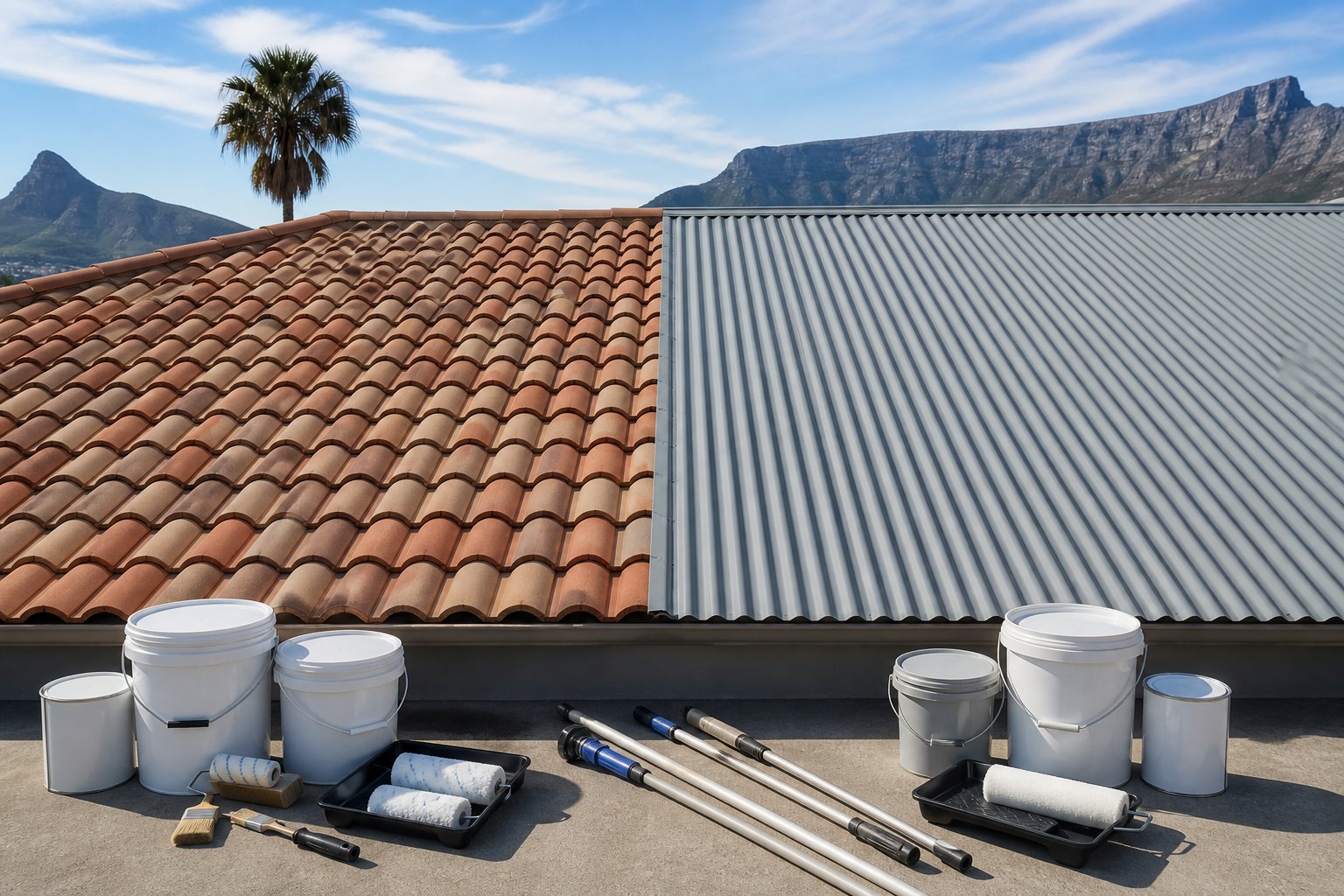
A tiled roof and an IBR metal roof may look equally faded from the ground, but they cannot be prepared or painted in the same way. The substrate, existing coating, corrosion risk and water-shedding details all affect the specification. Before choosing a colour, establish what the roof is made from, whether it is sound and whether a coating will solve the problem you have.
First identify the roof material and its condition
Concrete roof tiles are porous and often develop surface growth as they age. Clay tiles vary: some are unglazed and absorbent, while others have a dense fired or glazed finish that may not accept an ordinary roof coating. IBR and corrugated metal sheets may be galvanised, factory-coated or previously repainted. Each surface needs a compatible preparation and primer system.
An inspection should cover more than the visible field of the roof. Check cracked or displaced tiles, loose ridge capping, sheet laps, screws and washers, flashings, valleys, gutters, old repairs and signs of corrosion. From inside the roof space, where access is safe, water marks can help locate a defect. A coating should not be used to hide failed components.
Roof access carries a fall risk, and old tiles can break underfoot. Wet growth and loose coating make surfaces slippery. Safe access, weather conditions and protection of gutters, walls, solar equipment and neighbouring property should form part of the work plan for any roof painting project in Cape Town.
How tile and metal preparation differ
| Stage | Concrete or suitable unglazed tile | IBR and other paintable metal roofing |
|---|---|---|
| Inspection | Check broken tiles, ridge bedding, porosity and surface erosion | Check rust, loose fasteners, failed washers, laps and perforation |
| Cleaning | Remove dirt, organic growth and loose material without damaging tiles | Remove salts, dirt, grease, chalk and loose coating |
| Repairs | Replace damaged tiles and repair compatible ridge details where required | Replace failed fasteners or sheets and repair flashings through the correct trade |
| Primer | Use the sealer or primer specified for the tile’s porosity and coating system | Use a primer suited to galvanised, factory-coated, bare or rust-affected metal |
| Reason to stop | Fragile tiles, active leaks, unsuitable glazed finish or saturated substrate | Severe corrosion, perforated sheets, active leaks or incompatible old coating |
Cleaning pressure must suit the roof. Excessive pressure can erode concrete tiles, force water beneath laps and ridges, or damage an old coating that might otherwise have remained sound. The roof then needs enough drying time before primer or topcoat. Painting a damp, contaminated surface is a common route to blistering and poor adhesion.
Preparing and coating concrete or clay tiles
Concrete tiles weather at the surface. Dirt and biological growth must be removed, but aggressive cleaning can expose a weak, sandy layer. After cleaning and drying, the contractor should check whether the tile remains firm and whether it absorbs water evenly. A porous or friable surface may need a compatible sealer or bonding primer before the finish coats.
Broken tiles should be replaced rather than bridged with paint. Ridge capping, valleys and flashings should also be put in order before coating. Paint can reduce water absorption and renew the appearance of a suitable tile, but it cannot correct poor roof pitch, failed underlay, displaced tiles or defective flashing.
Clay tiles need particular caution. An unglazed, absorbent clay tile may accept a system designed and approved for that substrate. A glazed tile has a much less receptive surface, and coating it without proven adhesion can lead to peeling. If the manufacturer of the coating system does not approve the tile type, do not improvise. A test area does not replace a written substrate recommendation, though it can confirm preparation and appearance on an approved surface.
Preparing IBR and other metal roofs
Metal roof preparation focuses on adhesion and corrosion control. Loose paint and rust must be removed to the standard required by the specified system. Dirt, coastal salts, chalk and grease also interfere with bonding. Rusted fasteners, failed washers and corrosion at overlaps need close attention because paint alone cannot rebuild metal that has been eaten away.
Bare galvanised areas require a primer intended for galvanised steel. Weathered factory coatings and sound old paint may need cleaning, abrasion and an adhesion primer, depending on the product system. Rust-affected steel may require mechanical preparation and a compatible anti-corrosive primer. These primers are not interchangeable. The product data sheet should state the accepted substrate, preparation method, film build, recoat window and weather limits.
New galvanised sheeting can carry oils or surface treatments from manufacture. Its bright appearance is not proof that it is ready for paint. Follow the sheet and coating manufacturers’ instructions for degreasing, weathering or chemical preparation. Household acid mixtures and unapproved etching methods can damage the zinc layer and create an inconsistent surface.
Waterproofing details are separate from decorative coating
Roof coatings form part of a weather-resistant system, but not every leak is a paint failure. Water may enter at a cracked tile, loose fastener, failed washer, open lap, penetration, valley or flashing. Those defects require the correct repair before coating. Applying membrane and paint over every joint can also obstruct drainage or make future repairs harder.
Where a compatible waterproofing detail is appropriate, reinforcement, sealant and coating must be used in the specified order and allowed to cure. The treatment needs to accommodate movement at joints without blocking designed water paths. CDC Painters’ waterproofing service can be considered for paintable roof details and associated areas, while defective sheets, roof structure or plumbing penetrations may require a roofer or another specialist.
External walls below the roof should also be checked after leaks or overflowing gutters. Damp marks, failed paint and open cracks may need attention through exterior painting preparation once the water source is corrected.
When a roof should not be coated
Postpone or avoid coating when the roof is not a sound paintable substrate. Clear stop conditions include active leaks that have not been traced, saturated tiles, rain or heavy dew within the product’s application window, severe corrosion, perforated sheets, unstable old coatings and unsafe access. A roof with widespread tile failure or badly corroded sheeting may need replacement rather than another paint layer.
Do not coat an unidentified fibre-cement roof until its material has been assessed. Older fibre-cement products may contain asbestos. They must not be pressure-washed, sanded, drilled or disturbed as ordinary roof surfaces. Testing, handling and any removal should be left to appropriately qualified asbestos professionals working under applicable South African requirements.
Solar panels, fragile roof lights and complex penetrations can also change the scope. If safe preparation cannot be completed around them, the work should wait until the relevant installer or specialist has made the area accessible. Painting over components, labels, drainage openings or moving joints is not a substitute for careful masking and detailing.
Specify the system before accepting a roof quotation
A useful quotation should identify the roof substrate, current defects, cleaning method, repairs included, primer, number of finish coats and areas excluded. It should also state how rust spots, ridges, fasteners and flashings will be treated. The cheapest line item may omit the preparation that determines whether the coating bonds.
Colour matters too. The selected colour must be available and approved in the chosen roof system, and body corporate or local requirements may apply. Allow for weather delays rather than forcing coating onto a damp or overheated surface. CDC’s wider Cape Town painting services can coordinate roof work with exterior surfaces where both are due, while the contact page is the place to discuss the roof type and arrange an assessment.
Frequently asked questions
Does every tiled roof need a primer?
Primer requirements depend on the tile and coating system. Porous or weathered concrete tiles may need a sealer or bonding primer, while some approved systems specify a different first coat. Follow the written product specification rather than a universal rule.
Can roof paint stop an existing leak?
Not reliably on its own. The leak source must be found and repaired. A compatible coating or reinforced waterproofing detail may then protect suitable areas, but it cannot replace broken tiles, perforated sheets or failed flashing.
Can a rusty IBR roof still be painted?
Light, localised surface rust may be treatable after proper preparation and priming. Deep pitting, perforation or widespread corrosion can make replacement the safer and more durable option. The sheet condition should be assessed before coating.
How long must a roof dry after cleaning?
There is no single time for every roof. Tile porosity, temperature, shade, humidity and weather all affect drying. The substrate must meet the moisture and application limits stated by the coating manufacturer before work continues.
Is painting a glazed clay tile recommended?
Only if a coating manufacturer expressly approves the product for that exact substrate and the required preparation can be achieved. Many glazed surfaces offer poor adhesion, so leaving them uncoated or replacing failed tiles may be the sounder choice.
More practical roof, damp and waterproofing guides
Continue with closely related guidance, then review the relevant Cape Town service page.
Discuss your painting requirements
Review CDC Painters services or request a project-specific quotation.