

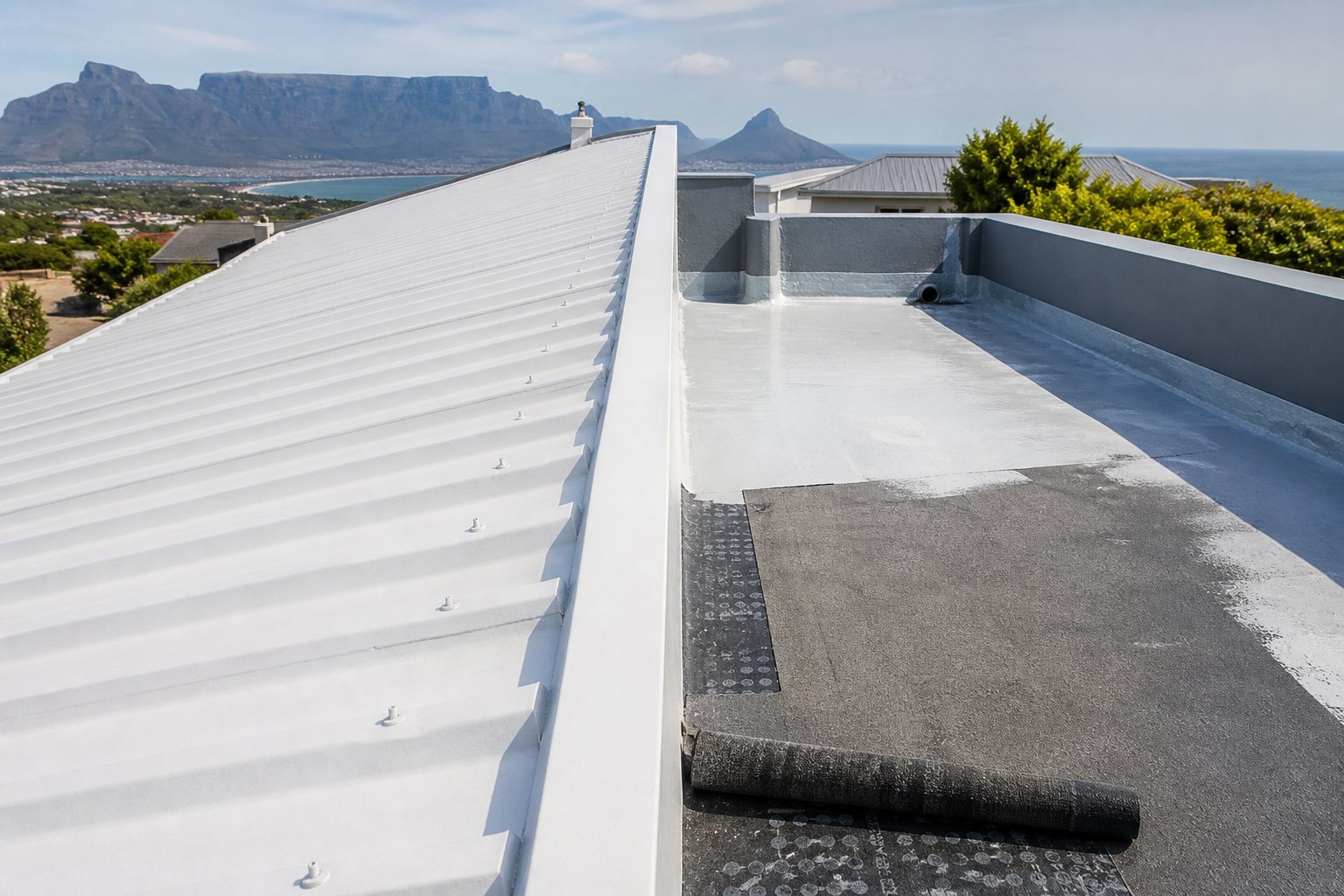
A faded roof and a leaking roof are not the same problem. Roof painting mainly renews and protects a suitable roof surface, while waterproofing addresses routes through which water is entering or threatening the building. Because the finished systems can look similar from ground level, property owners sometimes ask for paint when the real need is leak diagnosis and waterproofing. Understanding the difference helps you define the work correctly before materials are ordered.
The short answer: appearance and surface protection versus water entry
Roof painting is appropriate when the roof covering is generally sound but its existing coating has weathered, faded or lost adhesion. Preparation and a compatible coating can improve the finish and protect the prepared surface from normal exposure.
Roof waterproofing is appropriate when there is water ingress, failed detailing or a vulnerable junction that needs a water-resistant system. The work may focus on flashings, laps, fasteners, valleys, parapets, joints or other specific areas rather than simply coating the entire visible roof.
Some projects need both. Waterproofing defects should be identified and dealt with first; painting can then form part of the broader finishing and maintenance scope where suitable. CDC Painters provides both roof painting in Cape Town and waterproofing services, allowing the proposed work to be matched to the observed condition.
What roof painting is intended to do
A roof coating creates a renewed decorative and protective finish over a properly prepared substrate. The process is not just a colour change. Preparation may include cleaning, removal of loose material, treatment of local corrosion where relevant, attention to failed coating edges and priming appropriate to the roof material.
Roof painting can make sense when the roof is structurally serviceable, the surface accepts the proposed coating and there is no unresolved source of water ingress. Typical signs that point towards a painting-led scope include widespread fading, chalking, patchy colour, minor coating breakdown or a previous finish nearing the end of its useful condition.
Paint should not be used to hide loose sheets, deteriorated roof components, significant corrosion or failed junctions. A fresh coating may make the roof look uniform without correcting what is happening beneath or between components. This is why condition checks and preparation are central to a proper painting service.
What roof waterproofing is intended to do
Waterproofing aims to prevent water moving through vulnerable parts of the building envelope. On a roof, the defect may be a failed flashing, an open lap, movement at a joint, degraded seal around a penetration, a cracked parapet junction or another break in the drainage and weatherproofing path.
The correct treatment depends on the substrate, the position of the defect and how water travels during wind and rain. Cape Town’s winter weather can drive rain against surfaces and into small openings, so the stain indoors is not always directly below the external entry point. Water can track along roof members or behind finishes before it becomes visible.
Waterproofing is therefore more than applying a general-purpose membrane or coating everywhere. The source, drainage pattern, compatible materials and detailing all matter. If the defect appears structural, involves damaged roof components or falls outside coating and waterproofing work, an appropriate roofing or building specialist may be needed before finishes proceed.
Use the symptom to define the likely scope
| What you notice | What it may indicate | Likely next step |
|---|---|---|
| Uniform fading with no indoor moisture | Weathered roof coating | Assess for preparation and roof painting |
| Peeling or flaking coating | Poor adhesion, ageing coating or moisture beneath the finish | Investigate the cause before repainting |
| A stain that worsens after rain | Active water ingress | Trace the entry route and assess waterproofing details |
| Moisture near a chimney, vent or parapet | Possible failure at a penetration or junction | Inspect flashings, seals and adjoining surfaces |
| Rust around fasteners or sheet edges | Local coating failure or deteriorating metal | Assess the extent; prepare and treat only if the substrate remains suitable |
| Cracks in parapets or adjoining plaster | Movement or failed exterior finish | Assess repair and waterproofing requirements before coating |
This table is a starting point, not a remote diagnosis. Similar symptoms can have different causes, and more than one defect may be present. Interior moisture can also come from plumbing or condensation rather than the roof.
Why painting over a leak usually fails
Ordinary roof paint is not a substitute for correctly detailed waterproofing. If water is entering at a lap, flashing or penetration, coating the broad roof area may leave the actual opening untouched. Even where a coating temporarily bridges a small gap, movement and ongoing exposure can reopen it.
Moisture trapped under a coating can also undermine adhesion, leading to bubbling, peeling or local discolouration. Indoors, repainting a stained ceiling before the source is resolved can produce the same cycle: the mark returns because the water path remains active. Allow wet materials to dry and confirm that the defect has been addressed before decorative repairs.
Cracks in parapets and adjacent plaster need similarly careful treatment. Preparation may involve opening and repairing suitable non-structural defects rather than filling only the visible surface. See CDC Painters’ approach to crack repairs and plaster preparation for related finishing work.
How to plan the work in the right order
- Record the symptoms. Note where stains appear, whether they follow wind-driven rain and how quickly they change. Photographs taken during and after rain can help.
- Inspect accessible areas safely. Look for coating failure, open junctions, damaged detailing and drainage problems. Roof access itself should be left to people equipped to work safely.
- Separate defects from finishes. Identify what needs waterproofing or specialist repair and what needs normal coating preparation.
- Resolve water entry first. Wet substrates and active leaks should not be covered by a decorative programme.
- Prepare and coat compatible surfaces. Cleaning, repairs, priming and application should suit the roof type and existing finish.
- Check related elevations. Water may enter through parapets, cracked walls or failed exterior joints rather than the main roof plane. An exterior painting assessment can help identify adjoining surface preparation needs.
A written scope should distinguish waterproofing details, preparation, primers and finish coats. It should also state exclusions where specialist roof replacement or structural advice may be required. To arrange a site-specific discussion, use the CDC Painters contact page.
Frequently asked questions
Can roof paint stop a leak?
Roof paint alone should not be treated as a leak repair. A leak requires the entry route and failed detail to be identified. A compatible waterproofing system may be part of the solution, but damaged components or structural defects can require another specialist.
Should waterproofing happen before roof painting?
Yes, active water-entry defects and failed details should generally be resolved before the final painting system. This prevents new paint from hiding evidence, being applied over damp areas or failing because the underlying problem remains.
Does a faded roof need waterproofing?
Not necessarily. Fading is usually a coating and appearance issue, provided the roof and its weatherproof details remain sound. An inspection is needed if fading is accompanied by peeling, corrosion, cracks or indoor moisture.
Why is the ceiling stain away from the suspected leak?
Water can travel along sheets, roof members, insulation or the back of finishes before becoming visible. Wind direction and roof pitch can also affect the route, which is why the indoor stain does not always identify the external defect.
Can roof painting and waterproofing be quoted together?
They can form one coordinated scope, but the quote should separate the functions. Waterproofing details, repairs, preparation and the final roof coating should be clearly described so that the property owner knows which problem each item addresses.
More practical roof, damp and waterproofing guides
Continue with closely related guidance, then review the relevant Cape Town service page.
Discuss your painting requirements
Review CDC Painters services or request a project-specific quotation.