

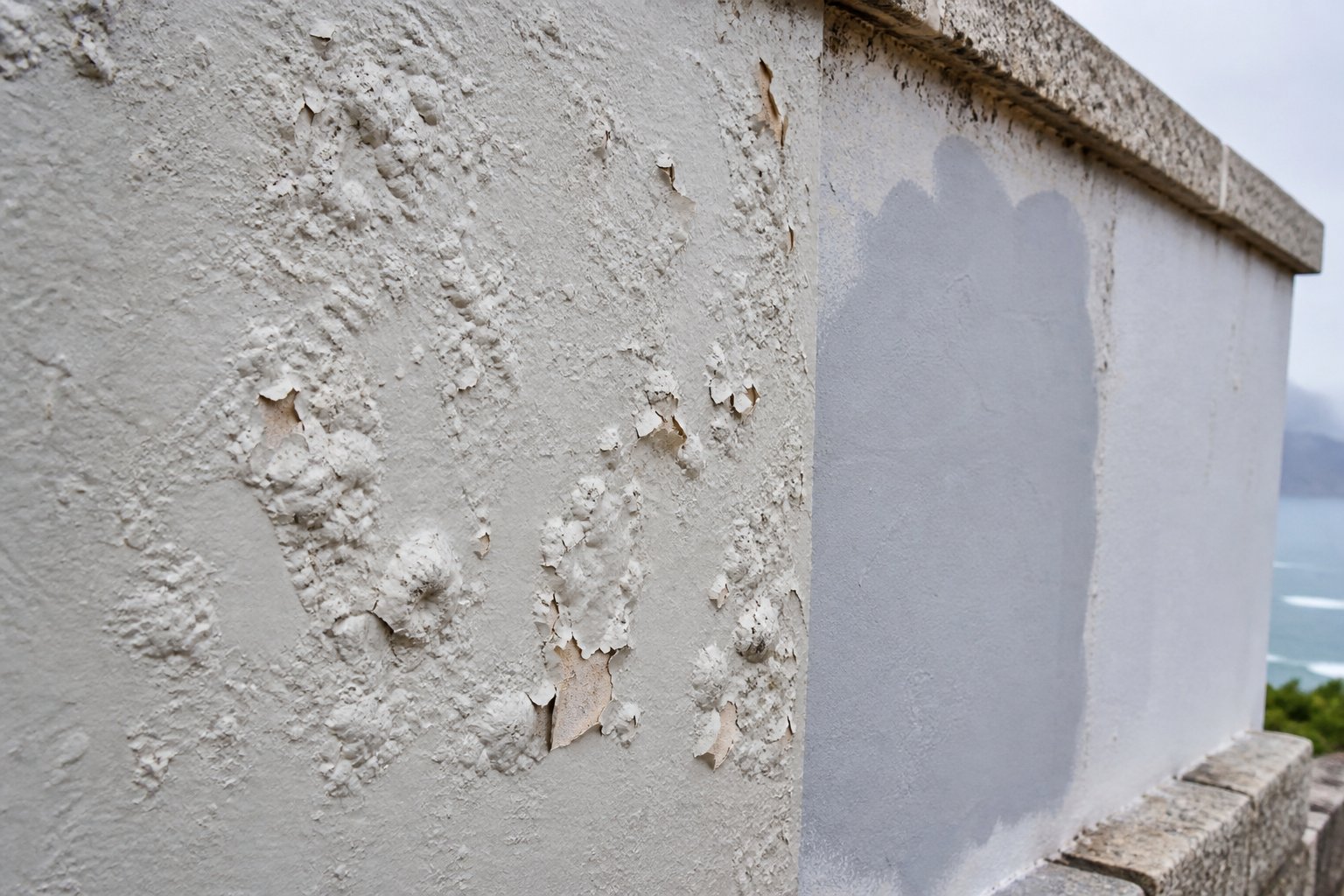
Paint blistering is common on exposed Cape Town properties, particularly where walls face salt-laden air, winter rain and strong summer sun. The bubbles may look like a simple coating defect, but repainting over them rarely lasts. Correct repair starts by finding out why the paint lost its bond and allowing the wall to reach a paintable condition.
What paint blistering looks like
A blister is a raised pocket in the paint film. It can be as small as a pinhead or large enough to lift several coats at once. Some blisters feel dry and hollow. Others split to reveal damp plaster, powdery residue or a darkened substrate. Once the film opens, nearby paint often begins to flake.
Blistering differs from ordinary fading or chalking. Faded paint can remain firmly attached, while blistered paint has separated from the coat beneath it or from the wall itself. The depth of that separation is useful evidence. If only the newest coat lifts, application conditions or poor adhesion between coats may be involved. If several layers come away and expose plaster or masonry, moisture or a weak underlying surface deserves closer investigation.
Why coastal conditions increase the risk
Cape Town’s coast exposes exterior walls to a demanding wet-and-dry cycle. Wind can drive rain into small cracks, unsealed joints, parapets and porous masonry. Sea air also deposits salt and grime on surfaces. These contaminants can interfere with adhesion if they remain on the wall when it is painted.
Sun adds another stress. A dark or exposed wall can heat quickly, then cool when the weather changes. If paint is applied to a hot surface, the outer film may dry before moisture or solvent below it can escape. Painting shortly before rain, heavy dew or mist can cause a similar problem because the coating has not had suitable time to cure.
Coastal exposure is not the only cause. A blister on an exterior wall can also be connected to water entering higher up, damp moving through masonry, failed sealant around an opening, or a surface that was painted before it had dried. Where moisture is suspected, waterproofing work in Cape Town or a separate leak investigation may be needed before painting starts.
Common causes to check before repainting
| Possible cause | Clues on site | What must happen first |
|---|---|---|
| Moisture behind the coating | Damp substrate, staining, repeated failure or several paint layers lifting | Trace and address the moisture source, then allow the wall to dry |
| Salt, dust or chalk on the surface | Powder transfers to the hand; paint peels from a dirty or friable layer | Clean thoroughly and remove material that cannot support a coating |
| Painting a hot wall | Failure follows work done in strong direct sun | Schedule coating for suitable shade and surface temperature |
| Rain, dew or mist during curing | Blisters appear soon after application and weather exposure | Use a workable weather window and follow coating instructions |
| Incompatible or poorly bonded coats | The newest layer separates cleanly from an older glossy coat | Remove loose paint, dull and clean sound coatings, and use the specified primer |
| Cracks or failed joints | Blistering follows a crack, sill, coping, pipe penetration or window edge | Repair the defect with a suitable system before coating |
The position of the damage matters. Blisters concentrated below a parapet suggest a different route from blisters at ground level. A wall beside a shower or kitchen may need an internal moisture check. Low-level bubbling with salts or crumbling plaster may point to a damp problem that ordinary exterior paint will not solve. CDC Painters’ damp-proofing service covers paint-related damp preparation, while plumbing or building defects should be handled by the relevant trade.
Correct preparation for a blistered wall
Preparation should extend beyond the visible bubble. Loose edges can hide weak paint around them, so the affected area must be tested and opened back to a firm boundary. Scraping, sanding or controlled mechanical preparation may be appropriate, depending on the substrate and coating. Aggressive pressure washing is not automatically the answer: used carelessly, it can drive water into cracks and leave the wall too wet to paint.
After loose paint is removed, the exposed surface needs cleaning. Dust, chalk, dirt and salt deposits reduce adhesion. The cleaning method must suit the wall and the coating specification, and any residue should be rinsed away where required. The surface then needs enough drying time. A wall can look dry on the face while retaining moisture deeper inside, so a contractor may use moisture checks and local weather conditions to guide the programme.
Cracks, defective plaster and open joints are repaired only once their cause and condition are understood. Weak plaster must be cut back to sound material rather than hidden under filler. CDC Painters provides crack repair and plaster preparation for paint-ready surfaces. A moving, wide or otherwise concerning crack should be assessed by an appropriate specialist before cosmetic repair.
Bare or repaired areas generally need a primer chosen for that substrate and the planned topcoat. A primer cannot compensate for dampness, contamination or loose plaster. It works only when the surface beneath it is sound and properly prepared. The finish coats should then be applied at the coverage, drying intervals and weather conditions stated for the selected system.
Why spot painting often leaves a visible repair
Even a technically sound patch can show. Existing exterior paint may have faded, weathered or developed a different texture, and the repaired area may absorb paint differently. Extending the coating to a natural break, corner or full wall often gives a more even result than touching in a small circle.
There is also a practical reason to inspect the wider elevation. If one patch has blistered because the entire wall was painted over chalk or salt, isolated scraping will not remove the weak layer elsewhere. A proper scope for exterior painting services should distinguish local failure from a coating problem affecting the whole surface.
Planning the work around Cape Town weather
Good preparation can still fail if the timing is wrong. Exterior work should avoid rain and heavy overnight moisture during the coating’s vulnerable period. Strong wind can carry dust and salt back onto a cleaned wall, while direct afternoon sun may push the surface outside suitable application conditions even on a mild day.
For sectional-title and managed properties, access and drying areas also need coordination. A staged inspection helps separate elevations that are ready for paint from areas waiting on repairs. Body corporate painting projects benefit from a written scope that records the preparation standard, repair boundaries and coating sequence rather than treating every elevation identically.
When to arrange a professional inspection
Arrange an inspection when blisters return after repainting, the wall feels damp, plaster is soft, stains spread after rain, or damage follows cracks and joints. It is also worth checking several elevations before accepting that a single patch is the whole problem. A painting contractor can assess coating condition and paint preparation. Plumbing leaks, roof defects or structural concerns may require the relevant specialist first.
CDC Painters can inspect paint failure and prepare a practical painting scope for residential or commercial property. See the available painting services in Cape Town or contact CDC Painters to discuss a blistered wall.
Frequently asked questions
Can blistered paint be painted over?
No lasting repair comes from coating over raised or loose paint. The failed material must be removed to a sound edge, and the cause of the lost adhesion must be addressed before priming and repainting.
Does coastal salt cause paint bubbles by itself?
Salt and coastal grime can weaken adhesion when a wall is not cleaned correctly. Blistering may also involve moisture, heat, poor curing conditions or an unstable old coating, so the site evidence should guide the diagnosis.
How long should a damp wall dry before painting?
There is no reliable fixed number of days for every wall. Thickness, exposure, weather and the moisture source all affect drying. The substrate should meet the coating manufacturer’s requirements before work continues.
Will waterproof paint fix recurring blisters?
Not if water is entering through an unresolved crack, joint, parapet, plumbing defect or another route. The source must be identified and repaired, and loose or contaminated material must be removed before any coating system is considered.
More practical exterior and preparation guides
Continue with closely related guidance, then review the relevant Cape Town service page.
Discuss your painting requirements
Review CDC Painters services or request a project-specific quotation.