

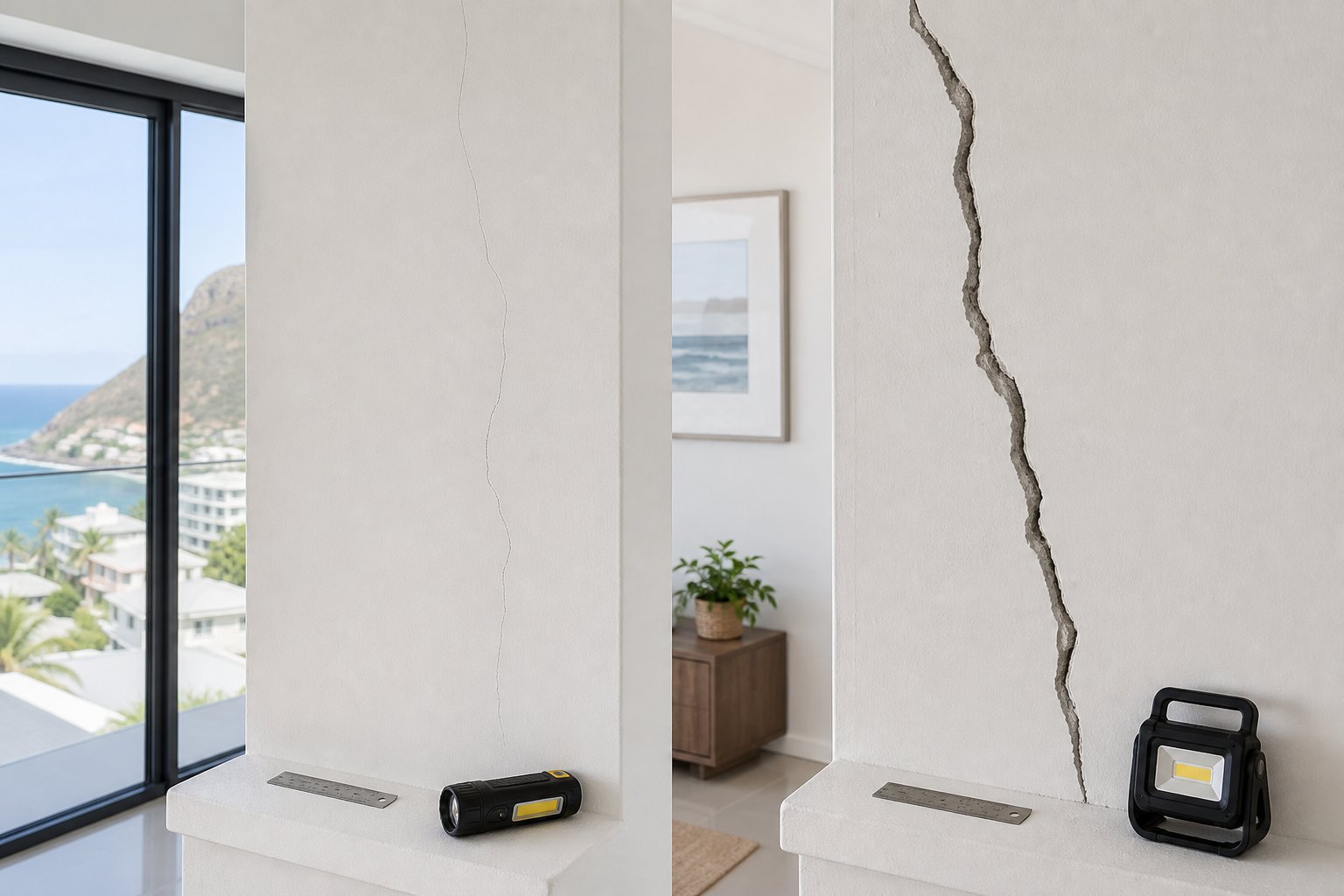
A wall crack does not explain its own cause. Many fine cracks are limited to paint or plaster and can be repaired during decoration. Others appear with movement, moisture or distortion that deserves assessment before a painter fills them. Property owners can make a sensible first check without trying to diagnose the building.
Start with what you can observe
Look at the crack’s width, direction, location and whether it has changed. Note which material is affected. A fine line in the paint film is different from a crack that continues through plaster, masonry or the same wall on both sides. The surrounding area matters as much as the line itself.
A single photograph is useful, but a dated series is better. Take clear photographs from the same position and include a ruler or another fixed scale without pushing anything into the crack. Record nearby sticking doors, visible moisture, new gaps or changes after heavy rain. Do not chip into the wall merely to investigate it.
These observations help a contractor or specialist understand the history. They do not prove that a crack is cosmetic or structural. Width alone is not a diagnosis, and a narrow crack can still deserve attention if it is growing or accompanied by other changes.
Features often associated with cosmetic cracking
Fine, stable cracks in a surface finish are often treated as cosmetic once the underlying wall has been checked. They may follow a plaster joint, appear where two materials meet, or develop as plaster and paint dry and respond to temperature changes. Small crazed patterns can also be confined to an old coating or the top layer of plaster.
A crack is more suitable for routine preparation when it has remained unchanged, is confined to the finish, and has no associated distortion or dampness. Even then, the repair method should suit the substrate. Smearing filler over an unopened hairline may leave too little material in the defect, while filling an active joint with a rigid product may lead to the line returning.
CDC Painters can assess the paint and plaster condition and include suitable preparation in an interior painting scope or exterior repainting project. This is a coating and surface-preparation assessment, not structural engineering advice.
Signs that justify specialist assessment first
Pause cosmetic work when the crack appears to be changing or forms part of a wider pattern. A suitably qualified building professional or structural engineer can decide what investigation is needed. Seek specialist input where one or more of the following are present:
- The crack is visibly widening, lengthening or reopening soon after repair.
- It runs diagonally from a door or window, follows a stepped path through masonry joints, or extends through more than the decorative finish.
- One side of the crack sits forward of the other, or the wall appears bowed or displaced.
- Related doors or windows have begun sticking, frames appear out of square, or new gaps have formed.
- Similar cracking is visible inside and outside in corresponding positions.
- Several cracks appeared over a short period or after nearby excavation, impact, flooding or other notable work.
- The area has persistent dampness, rust staining, loose masonry or falling plaster.
This checklist is deliberately cautious. None of these observations confirms a structural cause on its own. They are reasons not to hide the evidence under filler and paint before someone with the right competence has assessed it.
A practical crack triage checklist
| What you observe | Practical next step |
|---|---|
| Fine line confined to paint or sound plaster, stable over time | Ask a painting contractor to assess preparation and coating options |
| Crack returns repeatedly after filling | Stop repeating the same cosmetic repair; investigate movement, moisture and material junctions |
| Diagonal, stepped or displaced crack | Arrange specialist assessment before decorating |
| Crack with sticking openings, sloping surfaces or new gaps | Record the changes and obtain qualified building advice |
| Crack with damp, staining or soft plaster | Find and address the moisture source before crack preparation and painting |
| Loose material creates a falling hazard | Keep people away from the area and obtain prompt professional help |
If there is an immediate safety concern, visible instability or falling material, move away from the affected area and contact an appropriate building professional or the relevant public safety authority. A blog article cannot assess site safety.
Moisture can change the repair decision
A crack may be the route through which water enters, or it may appear where damp has weakened plaster and paint. Staining after rain, bubbling paint, powdery deposits and a musty smell all justify a moisture check. Filling and repainting while the area remains wet can trap the symptom without resolving the source.
On an exterior wall, inspect nearby parapets, copings, window edges, sealant joints and penetrations rather than assuming the visible crack is the only entry point. Low-level damp may have a different cause from wind-driven rain higher on an elevation. CDC Painters offers waterproofing preparation and coating work and damp-proofing services within its painting scope. Plumbing, roof, drainage or structural defects should be referred to the relevant specialist.
What proper cosmetic crack preparation involves
Once the crack has been judged suitable for cosmetic repair, the surrounding surface should be checked for loose paint and unsound plaster. Weak edges are removed to firm material, and dust is cleaned out. The chosen filler or repair material must suit the depth, substrate, location and expected movement. Exterior exposure usually demands a different approach from a fine crack in dry interior plaster.
Some repairs need more than one application because deep filler can shrink as it dries. Raised areas are sanded or levelled after curing, and bare porous patches may need spot priming. If staining was present, the cause must be resolved before a compatible coating system is selected. The aim is a sound, even, paint-ready surface, not merely a white line over the defect.
Texture and porosity also affect the final appearance. A smooth filler patch can flash through a textured wall, while a porous repair can absorb the first coat differently. Extending preparation and paint to a natural boundary may produce a more consistent finish. CDC Painters’ crack repair and plastering service covers this paint-preparation stage after any required specialist work is complete.
Why cracks sometimes return after painting
A repaired line can reappear because the substrate is still moving, the wrong repair material was used, or the filler did not bond to dusty edges. It can also return where different materials meet and expand at different rates. Repeated failure is useful information. Photograph it and review the cause rather than adding another coat.
No painter can make a responsible promise that every crack will remain invisible regardless of future movement. The practical approach is to separate stable surface defects from cracks needing investigation, prepare sound material correctly and use a compatible coating. For larger residential, commercial or sectional-title projects, a written scope should identify which cracks are included and which are excluded pending specialist advice. CDC Painters provides body corporate painting where this distinction helps owners and trustees plan work clearly.
Who should you call?
Call a painting contractor when the concern appears limited to paint, filler or plaster preparation and there are no warning signs. Call a plumber, roofer or waterproofing specialist when the evidence points to water from that system. Ask a structural engineer or another suitably qualified building professional to assess cracks that are changing, displaced, patterned through masonry or accompanied by distortion.
After the cause has been assessed and any necessary remedial work completed, CDC Painters can prepare and repaint the affected surfaces. Review the company’s Cape Town painting services or request a site discussion.
Frequently asked questions
Is every hairline wall crack cosmetic?
No. Many hairline cracks are confined to paint or plaster, but size is only one clue. A fine crack that is growing, damp, displaced or linked with other changes should be assessed before it is filled.
Can a painter tell whether a crack is structural?
A painter can assess coating failure, loose plaster and the preparation needed for decoration. A structural diagnosis falls outside ordinary painting work. Concerning cracks should be referred to a suitably qualified building professional or structural engineer.
Should I fill a crack before a specialist sees it?
Do not hide a changing or concerning crack before assessment. Leave it visible, take dated photographs and note related changes. The specialist may want to inspect its path and surrounding materials.
Why does the same crack keep showing through paint?
The crack may still be moving, or the previous repair may have had poor adhesion, insufficient depth or an unsuitable material. Moisture and junctions between different materials can also contribute. Repeated cosmetic filling is not a substitute for finding the cause.
When can painting start after crack repair?
Painting can start when the required underlying work is complete, the repair has cured, the surface is dry and sound, and the primer and coating requirements can be met. The timing varies with the repair material and site conditions.
More practical exterior and preparation guides
Continue with closely related guidance, then review the relevant Cape Town service page.
Discuss your painting requirements
Review CDC Painters services or request a project-specific quotation.