

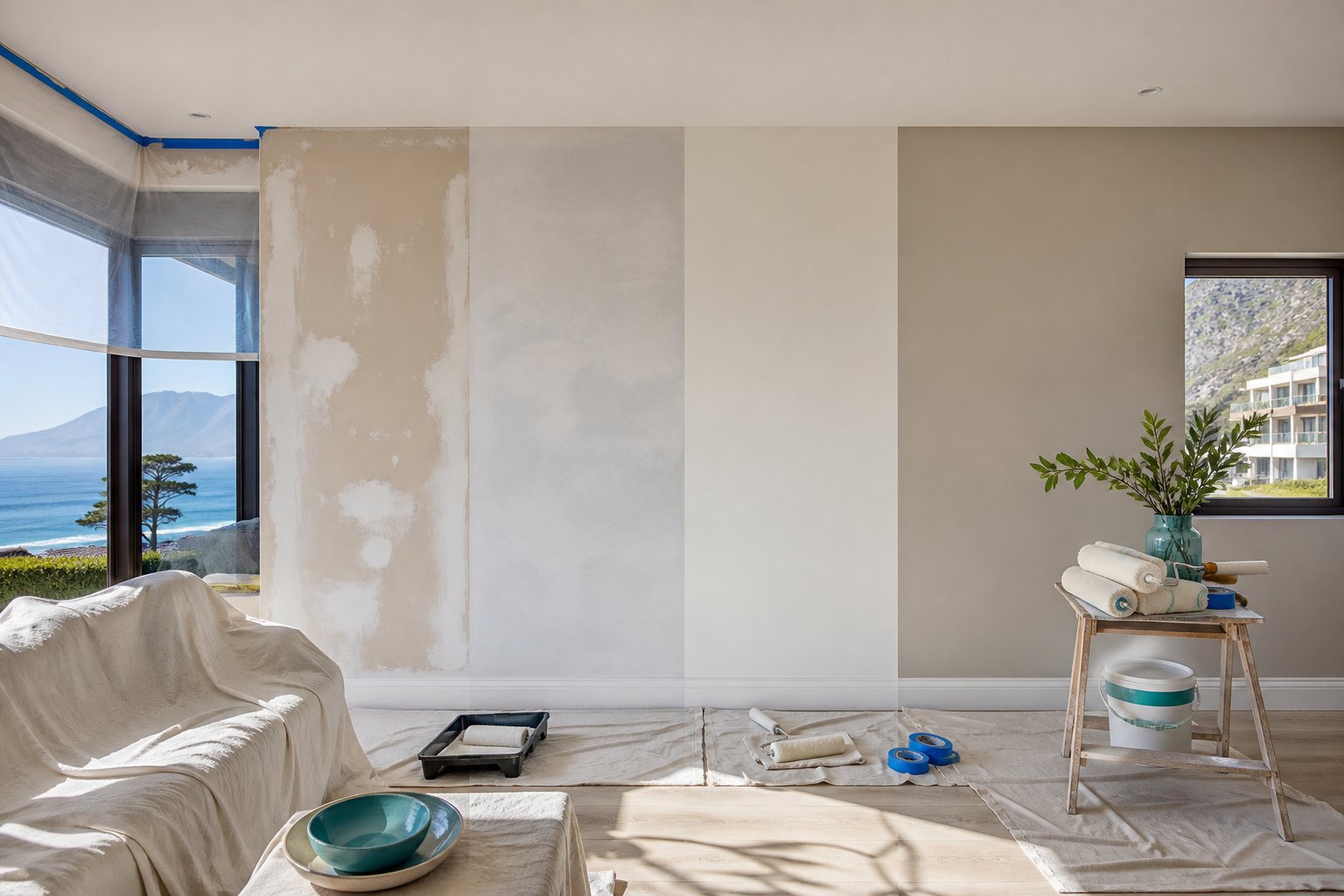
A full interior repaint takes more planning than painting one empty room. Furniture, repairs, drying time and access all affect the programme. For an occupied Cape Town home, the best schedule is usually phased so that bedrooms, bathrooms and living areas remain usable where possible.
How long does a full interior repaint usually take?
Many average-sized homes can be repainted internally in roughly one to two working weeks. A smaller, empty flat with sound walls may take less time. A large occupied house with detailed trim, high ceilings or widespread surface defects may take longer. The useful question is not simply how many days the job takes, but what must happen during each stage.
A contractor can give a firmer programme after inspecting the rooms and confirming the scope. That assessment should cover wall and ceiling condition, the number of colours, doors and trim, access, furniture movement and whether the property will remain occupied. CDC Painters provides interior painting in Cape Town for homes that need anything from targeted room updates to a complete internal repaint.
| Stage | Typical allowance | What happens |
|---|---|---|
| Inspection and scope | Before work starts | Rooms, surfaces, repairs, colours and access are agreed. |
| Set-up and protection | Half a day to one day | Furniture is moved, floors are covered and fittings are protected. |
| Preparation | One to three days | Surfaces are cleaned, loose paint is removed and cracks are prepared. |
| Priming and painting | Three to seven days | Required primers and finish coats are applied in a planned sequence. |
| Touch-ups and handover | Half a day to one day | Rooms are checked, minor defects are corrected and protection is removed. |
These allowances are planning ranges, not a quote. Drying conditions, repair work and the size of the painting team can change them.
Before day one: inspection, colours and decisions
Time spent making decisions before the team arrives prevents avoidable delays. Confirm which walls, ceilings, skirtings, doors, frames and built-in cupboards are included. Record any rooms that need to stay available at certain times. If several colours are being used, create a simple room schedule that names the colour and finish for every surface.
Colour samples should be viewed in the actual room during the day and under artificial light. Cape Town’s strong daylight can make pale colours look cooler or brighter than expected, while shaded rooms may need a different approach. Finalise the colours before paint is ordered. Late changes can interrupt the sequence and may require extra coats.
The condition inspection is equally important. Hairline surface cracks need a different response from recurring movement cracks or damp staining. CDC’s crack repair and plaster preparation service explains the preparation work that may be needed before coating. If staining or mould suggests an active moisture problem, investigate the cause first. Painting over an unresolved issue rarely gives a lasting result; damp proofing may be relevant where moisture is entering through walls.
Day one: access, protection and room set-up
The first day is often less visually dramatic because it is devoted to protection. Small items, pictures and curtains should already be removed. Larger furniture can be moved to the centre of a room or shifted out, depending on the agreed plan. Floors, counters, fixed cabinetry and remaining furniture need suitable covering. Switch plates and removable fittings may be taken off rather than painted around.
Good access saves time throughout the job. Clear passages give painters room to move tools and ladders without brushing against finished surfaces. Homeowners should identify alarm sensors, delicate fittings and any items that must not be moved. Pets also need a secure area away from open paint containers, wet surfaces and regularly opened doors.
Preparation often determines the programme
Preparation can take as long as the coating stage when walls are in poor condition. The team may wash dirty areas, scrape flaking paint, open and fill cracks, sand rough patches and spot-prime exposed or repaired surfaces. Glossy trim often needs cleaning and abrasion so the next coat can bond properly.
Fresh filler and plaster must be ready for coating. Rushing a repair before it has dried can cause flashing, cracking or poor adhesion. Stains may also require a suitable isolating primer rather than another coat of ordinary wall paint. A realistic timeline leaves room for these steps instead of treating preparation as a quick formality.
If extensive defects only become clear after pictures are removed or loose material is scraped back, the scope may need to be reviewed. Ask the contractor to explain what was found, how it changes the preparation method and whether it affects the completion date.
Priming, cutting in and finish coats
Not every previously painted wall needs a full primer coat. Primer may be needed on bare plaster, repaired areas, porous surfaces, stains or where the existing coating is unsuitable for the new system. The product choice should match the substrate and the finish coat.
Painting then moves through ceilings, walls and trim in a controlled order. Teams may complete rooms one at a time in an occupied house or work across several rooms by stage in an empty property. Each coat needs enough drying time before recoating. Cold winter conditions, poor ventilation and coastal humidity can slow the process, particularly in bathrooms and shaded rooms.
A full programme also accounts for doors. Both faces cannot always be painted at once, and closing a freshly coated door too early may mark the finish. Skirtings, frames and detailed mouldings are slower than broad wall areas. Homeowners comparing proposals should check whether these elements are included rather than judging only by the floor area. CDC’s wider painting services page outlines the types of residential and commercial work available.
Planning an occupied home room by room
Occupied homes benefit from a clear sequence. Bedrooms can be completed in rotation, with one kept available while another is being painted. Bathrooms should be scheduled so at least one remains usable. In the kitchen, agree when counters, appliances and cupboards will be inaccessible. Work in the entrance hall should be timed around the household’s normal movement.
- Pack away valuables, paperwork and fragile objects before the start date.
- Keep one clean room available for daily essentials.
- Confirm when each room can be re-entered and when furniture may be moved back.
- Plan for ventilation without compromising security.
- Tell the team about remote work, young children, pets or medical sensitivities.
For a rental or home that will be empty between occupants, completing the work before flooring installation, professional cleaning and furniture delivery can reduce congestion. Commercial spaces need a separate access and operational plan; the considerations are covered under commercial painting in Cape Town.
Final inspection, touch-ups and moving back in
The final walkthrough should take place in good light. Check the agreed surfaces, edges, repaired areas and trim. Minor touch-ups are normal, especially after masking and protective coverings are removed. The team should also remove debris and leave the painted areas ready for normal cleaning once the coating has cured.
Dry to the touch does not mean fully cured. Avoid scrubbing new paint or pressing furniture and wall hangings hard against it too soon. Follow the coating manufacturer’s guidance for cleaning and cure time. Keep leftover labelled paint, if supplied, for future reference. For help defining a scope and programme for your property, use the CDC Painters contact page.
Frequently asked questions
Can we stay in the house during a full interior repaint?
Often, yes. A phased room-by-room plan can keep parts of the home available. Discuss ventilation, access, pets, children and any sensitivity to paint odour before work starts.
What causes an interior repaint to take longer?
Extensive filling and plaster repairs, damp investigation, many colour changes, detailed trim, restricted access and slow drying conditions can all extend the programme.
Should ceilings and trim be painted at the same time?
It is usually more efficient to include them in the same project if they need attention. Confirm them in the scope because a wall-only quote does not automatically include ceilings, doors, frames or skirtings.
When can furniture go back against the walls?
Wait until the paint has dried sufficiently and follow the manufacturer’s cure guidance. Moving furniture back too early can mark soft paint or trap it against the wall.
How should homeowners compare repaint quotations?
Compare the listed surfaces, preparation, primer requirements, number of coats, exclusions, access arrangements and expected programme. A price without a clear scope is difficult to assess fairly.
More practical interior and property planning guides
Continue with closely related guidance, then review the relevant Cape Town service page.
Discuss your painting requirements
Review CDC Painters services or request a project-specific quotation.