

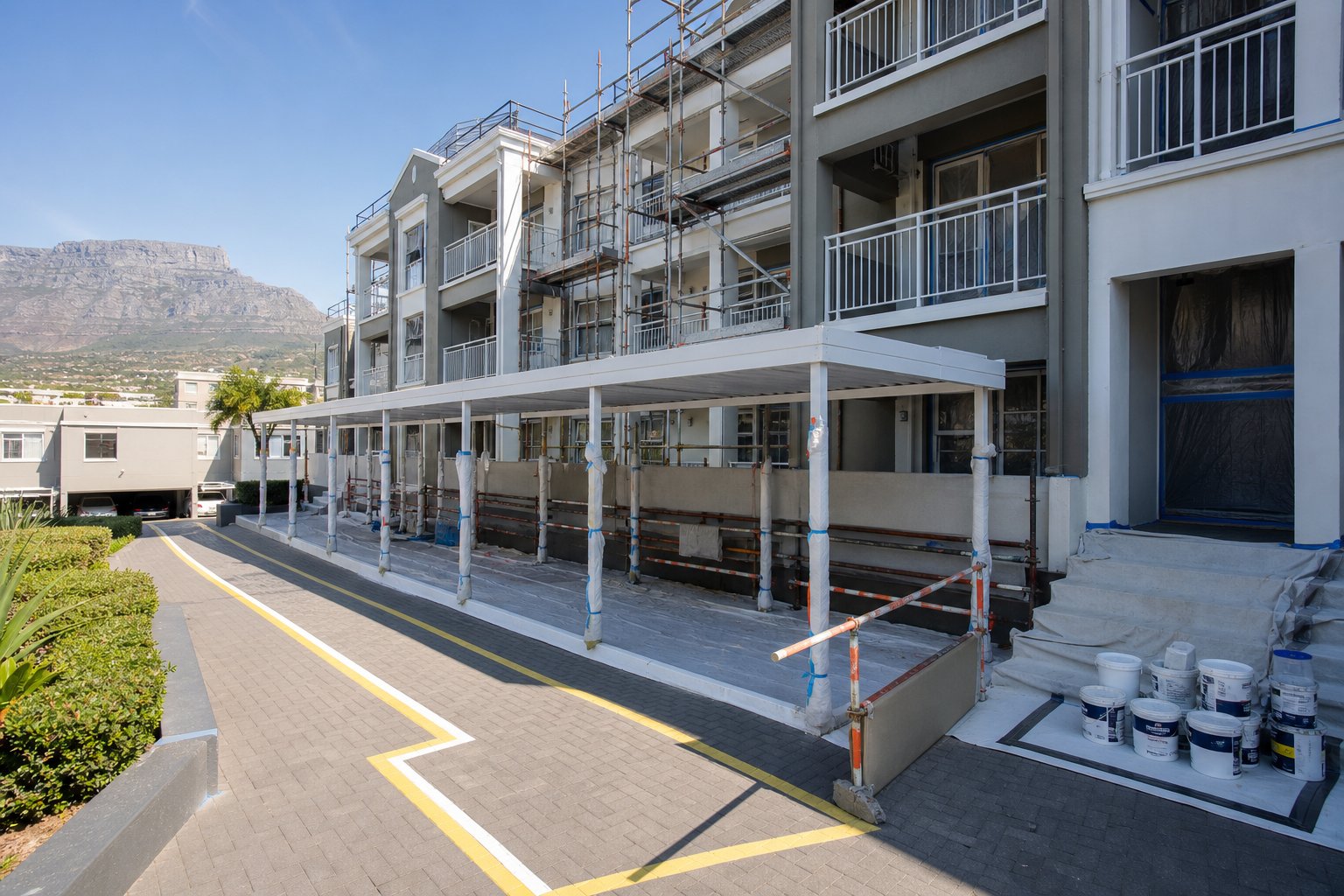
Repainting an occupied apartment block is as much an operations exercise as it is a painting project. Residents still need to leave for work, receive deliveries, use parking areas and enjoy reasonable access to their homes. A workable plan accounts for those daily routines while giving the painting team enough space and time to prepare and coat each surface properly.
Start with the building, not the paint colour
Before choosing colours or dates, inspect the surfaces and record what needs attention. External walls may have chalking paint, hairline cracks, failed sealant, damp staining or loose plaster. Common passages and stairwells may show scuffs, hand marks and localised damage. Balconies, boundary walls, soffits, fascia boards and metal railings may each need a different preparation and coating system.
The inspection should separate painting work from defects that need another specialist. Persistent moisture, movement cracks or damaged concrete should not be hidden under a new coating. Where cracks and plaster defects fall within the painting preparation scope, arrange the required crack repairs and plaster preparation before finish coats begin. Suspected structural movement or another technical defect calls for assessment by a suitably qualified professional.
Turn the inspection into a written scope broken down by elevation, floor and surface type. This helps the body corporate compare quotations on the same basis and prevents vague phrases such as “paint the exterior” from concealing gaps. CDC Painters’ body corporate painting service is relevant to trustees and managing agents coordinating this type of occupied property project.
Build a programme around resident access
A block-by-block or elevation-by-elevation programme is usually easier to manage than opening every work area at once. Divide the property into zones and show the planned preparation, drying and coating periods for each one. Allow for weather delays, especially on exposed Cape Town elevations where wind or rain can stop safe access and affect coating conditions.
Identify the places that cannot be closed without an alternative: entrance doors, staircases, pedestrian gates, driveways, refuse rooms and accessible routes. Work around peak movement where practical. For example, a team may avoid coating the main entrance during the morning departure period or keep one staircase available while another is being prepared.
Drying time belongs in the programme. A surface that looks touch-dry may not be ready for contact, a second coat or exposure to rain. Residents should know when a handrail, walkway edge or door can be used again. Rushing this stage can cause marks, damaged finishes and repeat work.
Give residents useful notice
General notices are not enough when work affects a specific balcony, parking bay or window. Use a layered communication plan: an initial project notice, a weekly look-ahead and a short reminder before work reaches each unit or zone. State what will happen, where it will happen, the expected dates, working hours and the action required from residents.
| Notice | When to send it | What it should cover |
|---|---|---|
| Project announcement | Before site establishment | Overall scope, broad dates, contact route and site rules |
| Weekly look-ahead | At the same time each week | Zones, access changes, parking restrictions and weather-related changes |
| Unit-specific reminder | Before work reaches the unit | Balcony clearing, window access, pets, curtains and revised timing |
| Daily update | When plans change | Delayed, completed or moved work and any temporary restrictions |
Keep instructions specific. If residents must clear balconies, say which items must move and by when. If windows should remain closed during washing, preparation or coating, give the affected elevation and time window. Provide one agreed contact channel for questions so that instructions do not become fragmented across trustees, security staff and contractors.
Plan access, protection and temporary work zones
The chosen access method affects far more than the painters. Scaffolding can occupy garden beds, walkways or parking edges. Mobile platforms need firm, level ground and room to move. Ladders have limited suitable uses and should not become a substitute for properly planned access. The contractor must assess the task, height, ground conditions and surrounding activity before selecting equipment.
Map the footprint of access equipment and establish exclusion zones before work starts. Protect vehicles, paving, plants, glazing, air-conditioning units and residents’ belongings from wash water, dust and paint splashes. If parking bays must be cleared, number them on the programme and give affected residents enough notice to make other arrangements.
Interior common areas need their own control plan. Wet-paint signs, protected floors, ventilated work areas and a clear route through corridors reduce inconvenience. If the scope includes entrances, passages or stairwells, the contractor’s approach to interior painting should be coordinated with cleaning, security and building access.
Control noise, dust, washing and odour
Preparation often causes more disruption than the coating itself. Scraping, sanding and minor plaster work create noise and dust. Washing external walls may produce runoff or spray near windows and balconies. Agree when these activities may happen and how the team will contain debris, collect loose material and leave common areas at the end of each shift.
Product selection should suit both the substrate and the occupied setting. Ask the contractor about ventilation, expected odour, re-entry conditions and drying times for each work area. Residents with babies, respiratory sensitivities or home offices may need extra notice, but the contractor should not make medical claims. The managing agent can gather practical access concerns without collecting unnecessary personal information.
For exposed facades, preparation and coating are only part of the moisture picture. If the inspection identifies water entry at relevant wall surfaces, discuss whether waterproofing work belongs in the scope. Damp symptoms should be investigated rather than covered; damp-proofing requirements depend on the cause and location of moisture.
Set daily site rules and responsibilities
Name one representative for the body corporate or managing agent and one for the contractor. They should confirm access, changes and resident notices. Security personnel and cleaners also need the current programme because they often deal with deliveries, locked areas and questions from occupants.
- Record the work zone and access restrictions for each day.
- Keep entrances, fire routes and agreed pedestrian paths clear.
- Secure tools, materials and access equipment when the team leaves.
- Remove waste and check common areas before the end of the shift.
- Report newly exposed defects before coating over them.
- Update the next day’s plan if weather or access has changed.
Agree how private-unit access will be authorised. Painters should not enter a unit or balcony through an apartment without an appointment and the building’s approved procedure. Keys, remotes and access tags need a documented handover process rather than informal arrangements.
Inspect in stages instead of waiting for the end
Quality control is easier while access equipment is still in place. Inspect preparation before primer or finish coats hide the substrate, then review completed work zone by zone. Record snags with their exact location and a photograph where useful. This avoids a long, unclear list at the end and allows residents to regain normal use of finished areas sooner.
Check colour placement at a sample area before applying it across the block. On completion, confirm that coverings, tape, debris and temporary signs have been removed and that fittings are clean. Keep a record of the agreed coating system and final colour references for future maintenance.
For help defining a practical occupied-site scope, discuss the property with a Cape Town painting contractor before fixing dates or issuing resident instructions.
Frequently asked questions
How far in advance should residents be told about painting?
Give an early project notice, then provide a weekly programme and a shorter unit-specific reminder. More notice is needed when residents must move vehicles, clear balconies or arrange access to private areas.
Can residents stay in the building during a repaint?
In many projects, residents remain in occupation while work proceeds in controlled zones. The answer depends on the scope, access method, ventilation, products used and whether safe routes can remain available. These points should be assessed before the programme is approved.
What happens when Cape Town weather delays exterior work?
The programme should include reasonable weather allowance and a process for daily updates. Surfaces may need additional drying time after rain, while strong wind can affect access safety and paint application.
Who should handle resident questions?
Use one agreed contact route managed by the body corporate, managing agent or nominated project representative. The contractor’s site contact can provide work updates, but consistent communication prevents residents from receiving conflicting instructions.
More practical commercial and managed property guides
Continue with closely related guidance, then review the relevant Cape Town service page.
Discuss your painting requirements
Review CDC Painters services or request a project-specific quotation.