

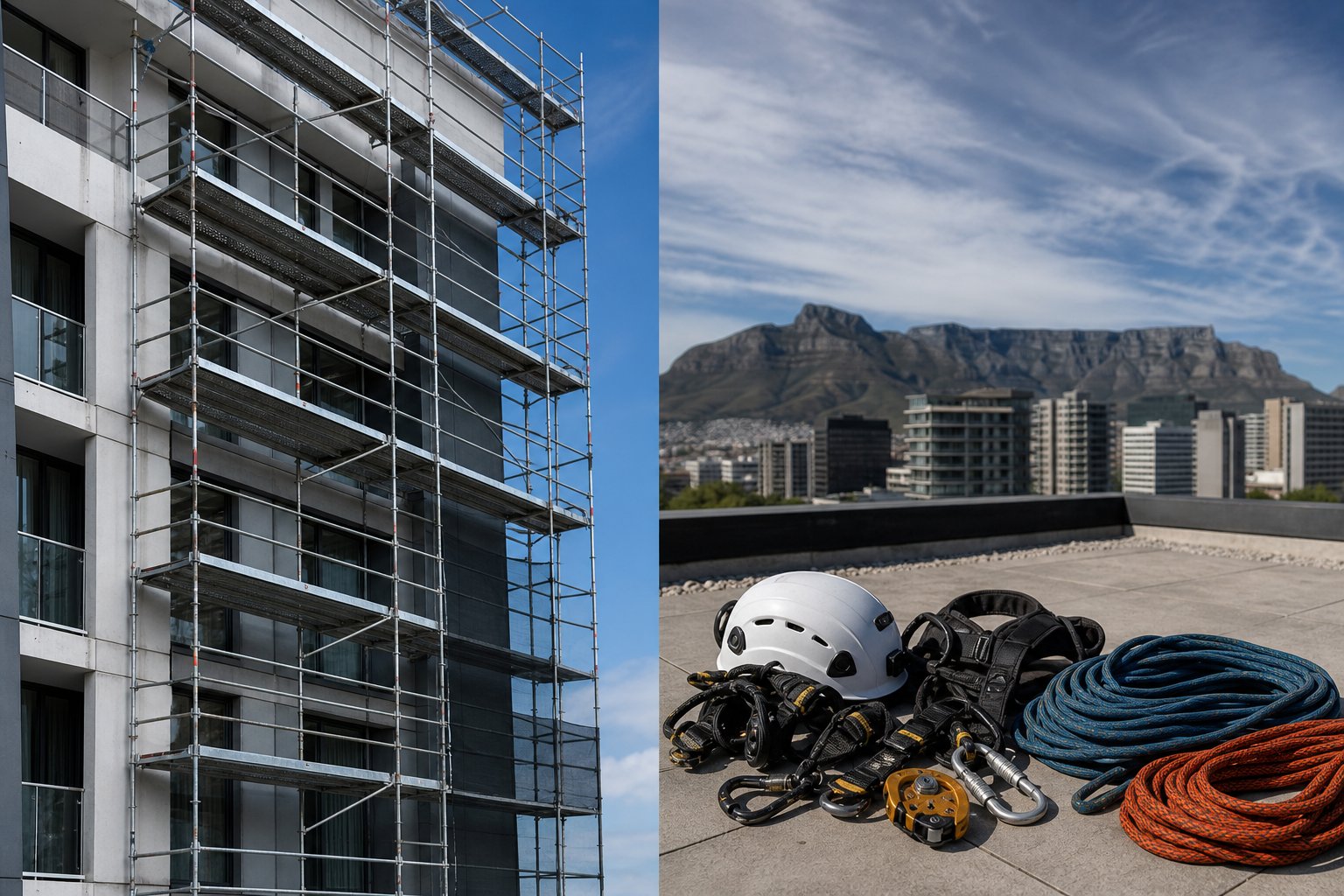
Access is one of the first decisions in a high-rise painting project, but it cannot be made from height alone. Scaffolding and specialist rope access create different working conditions, site footprints and limits. The right approach depends on the building, the surfaces, the preparation required and the activity around the work area.
Define the work before choosing access
A quotation that starts with an access method can put the decision in the wrong order. Begin with a close review of each elevation and list the required tasks: washing, paint removal, crack opening and filling, plaster repairs, priming, sealant work and finish coats. Some tasks need two-handed work, several tools or longer dwell time at one location. Others are small, isolated areas that can be reached without establishing a large working platform.
Record facade projections, balconies, recessed windows, roof edges, service pipes, signage and fragile features. Access to the top of the building matters as much as access to the facade. Roof condition, anchor requirements, parapets and plant areas may affect what is feasible, but those points require assessment by competent specialists.
A commercial painting scope should also state how substrate defects will be handled. If inspection finds failed plaster or cracks within the preparation scope, identify the necessary crack and plaster work. Suspected structural cracking, unsafe concrete or movement requires the appropriate professional assessment before painting continues.
How scaffolding changes the job
Scaffolding provides a platform from which workers can prepare and paint a defined section of facade. It can suit broad areas, repeated repairs and work that needs materials or equipment close at hand. A stable platform may make detailed surface preparation and inspection easier, subject to correct design, erection, inspection and use.
Its footprint is the obvious trade-off. Scaffolding may affect entrances, pavements, courtyards, parking bays and landscaping. Ties, bases, loading areas and protective measures must be planned around the building’s use. On an occupied property, the project team also needs to control access to the scaffold, falling-object risks and interaction with residents or the public.
Scaffold is not a generic arrangement that can simply be copied from another building. Height, loading, geometry, ground conditions, wind exposure and ties all matter. The responsible supplier and project safety team should determine the required design, erection controls and inspection process.
What specialist rope access can and cannot solve
Rope access allows trained specialists to reach a facade from a controlled rope system, often with a smaller ground footprint than full scaffolding. It may be considered for isolated or difficult-to-reach work where suitable anchor systems, rescue arrangements and site conditions exist. It can reduce the amount of fixed access equipment around entrances or narrow spaces.
The smaller footprint does not make the method automatically simpler or suitable. Workers still need exclusion zones below. Weather, wind, rope paths, sharp edges, facade projections, tools and material handling all influence the plan. Some repair or preparation tasks may be inefficient or unsuitable while suspended, particularly where the work needs a broad platform, heavy equipment or extensive removal of unsound material.
Rope access must be evaluated and delivered by appropriately competent rope-access specialists. CDC Painters does not claim to provide rope-access services. If a project requires that method, the building representative should appoint or coordinate with a suitably qualified specialist and define how the painting scope, access responsibility and safety controls fit together.
Compare the methods against the same questions
| Project question | Scaffolding | Specialist rope access |
|---|---|---|
| Work area | Often suits broad, continuous elevations | May suit isolated or difficult-to-reach locations |
| Preparation needs | Platform can support detailed, repeated work | Suitability depends on tasks, tools and material handling |
| Ground footprint | Requires bases, access points and controlled space | Usually smaller, but still needs exclusion zones |
| Building interface | May need ties and affect windows, paths or entrances | Needs suitable anchors, rope paths and edge protection |
| Weather exposure | Wind and rain still affect safety and coating work | Wind and weather can place tighter limits on operations |
| Specialist controls | Requires competent design, erection and inspection | Requires competent rope-access planning, supervision and rescue arrangements |
This comparison is a screening tool, not a safety assessment. A building may use more than one access method across different elevations. Mobile towers, platforms or other systems may also be relevant where the task and site conditions permit. The decision should follow a site-specific assessment rather than a preference for one method.
Ask who controls safety and coordination
High-rise work needs clear lines of responsibility. The property owner, managing agent, principal contractor, access provider and painting team may each have different duties. Contracts and project documents should say who designs or approves the access system, who inspects it, who controls exclusion zones and who can stop work when conditions change.
Ask how tools and paint containers will be secured, how people below will be protected and how rescue or emergency arrangements apply to the selected method. Also confirm how the team will prevent unauthorised access to equipment after hours. These are planning questions for the competent parties involved, not items to leave until work begins.
Public interfaces need particular care. A facade above a pavement, shop entrance or neighbouring property may require coordination beyond the building’s boundary. Delivery routes, waste removal and safe storage also belong in the site plan. If the property is a sectional-title scheme, the body corporate painting process should include trustee approvals and resident communication.
Factor in preparation, coating and weather
Access must allow painters to do more than reach the wall. They need to assess adhesion, remove loose material, prepare edges, apply the specified primer and achieve the required coating coverage. If a method makes proper preparation impractical, a fast setup can lead to poor value because the finish is only as sound as the surface underneath it.
Coating conditions apply at height just as they do at ground level. Wind can carry spray or debris, while rain and surface moisture interrupt external work. Direct sun may heat one elevation while another remains cool. The programme should allow the team to move or pause without applying paint outside suitable conditions. CDC Painters’ exterior painting service covers the preparation and coating questions that need to be defined for exposed walls, separately from specialist access design.
Water staining may indicate a separate moisture issue. Where facade water entry falls within the relevant scope, assess waterproofing needs before repainting. A coating should not be used to conceal an unidentified leak or damp source.
Price and programme the whole system
Comparing only the access line item can be misleading. Review mobilisation, design or specialist inputs, erection time, inspections, protection, exclusion zones, daily setup, weather downtime and removal. Then consider how quickly the selected method allows the actual preparation, repairs and painting to proceed.
Ask bidders to price the same written scope and state exclusions. One quotation may allow for broad preparation while another assumes spot treatment. One may include pavement protection or reinstatement while another does not. The building representative should resolve these differences before appointment rather than relying on the lowest headline total.
Prepare an access brief for quotations
- Provide elevation drawings, photographs and known facade defects.
- List every preparation, repair and coating task by area.
- Identify entrances, pavements, parking, neighbours and public routes.
- Describe roof access, known anchor information and restricted areas without assuming suitability.
- State working-hour, noise and resident-notice requirements.
- Ask who is responsible for access design, inspections, exclusion zones and reinstatement.
- Require bidders to list assumptions, exclusions and specialist dependencies.
This brief helps a painting contractor and any separately appointed access specialist assess the same job. To discuss the coating and preparation scope for a Cape Town property, use CDC Painters’ contact page.
Frequently asked questions
Is rope access always cheaper than scaffolding?
No. Cost depends on the building, work area, duration, preparation, repairs, safety controls and specialist requirements. Compare complete scopes rather than the access method in isolation.
Does CDC Painters offer rope-access painting?
CDC Painters does not claim to provide rope-access services. Where rope access is required, the property representative should involve a suitably qualified specialist and coordinate that access scope with the painting work.
Can one building use both scaffolding and rope access?
Potentially, yes. Different elevations or tasks may suit different access systems. Competent parties must assess how the methods interface and who controls each part of the work.
Which method is better for extensive facade repairs?
A working platform may be more practical for broad repairs or tasks requiring several tools and materials, but the answer depends on the defect, facade and site. The repair scope and access system both need competent assessment.
Who decides whether the access system is safe?
The decision belongs to the competent parties responsible for the project and the selected access method. Their assessment should cover the building, equipment, weather, work tasks, people below and emergency arrangements.
More practical commercial and managed property guides
Continue with closely related guidance, then review the relevant Cape Town service page.
Discuss your painting requirements
Review CDC Painters services or request a project-specific quotation.