

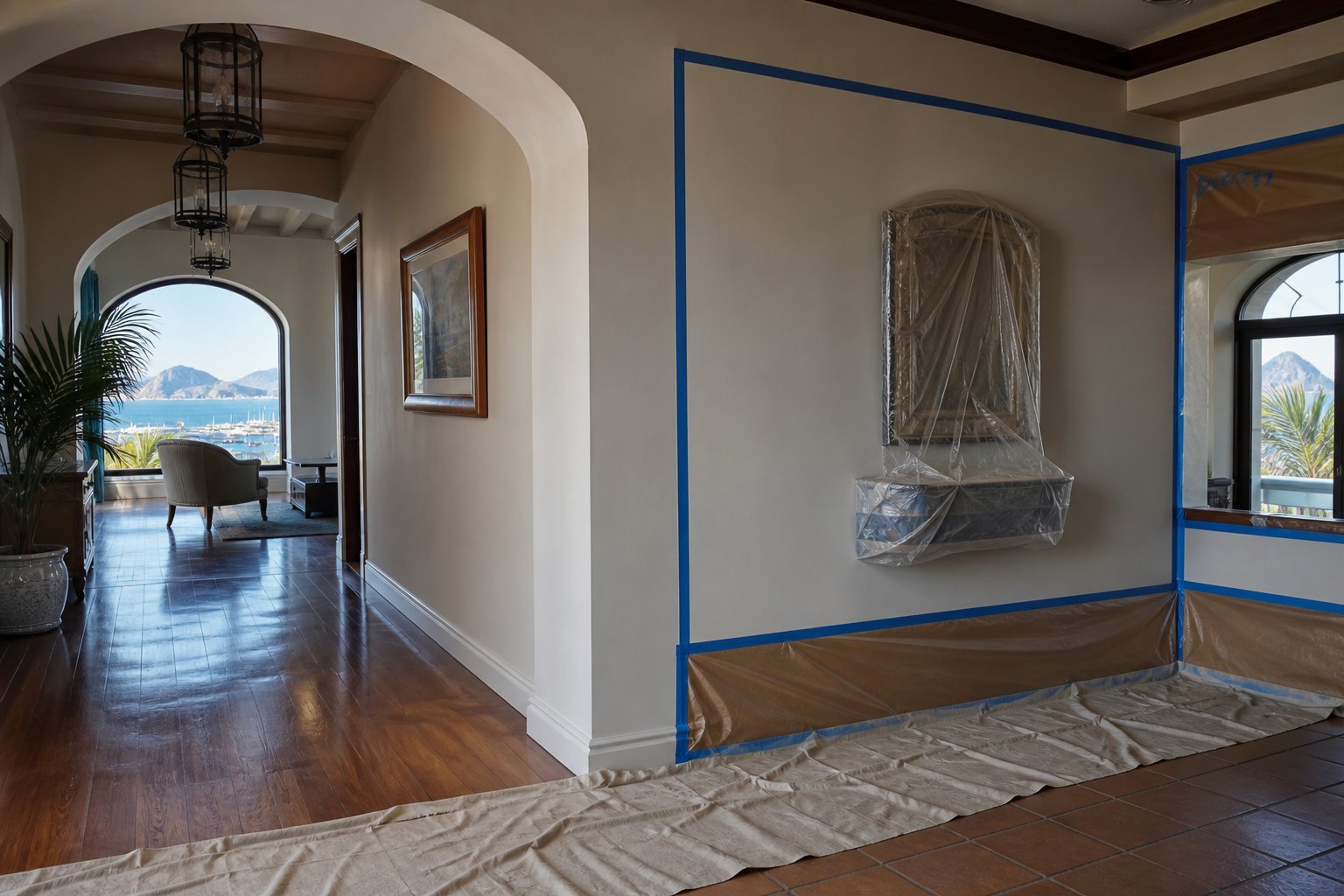
A shop, restaurant or guesthouse cannot plan painting as if the property were empty. Customers arrive throughout the day, staff need access to service areas and every closed section can affect revenue. The answer is a site-specific programme built around occupancy, safe routes, surface condition and realistic drying time.
Let the operating pattern shape the painting sequence
Start by plotting the property’s actual rhythm. A retailer may have delivery periods, weekend peaks and promotional changes. A restaurant has preparation, service, cleaning and supplier access. A guesthouse must account for arrivals, departures, room cleaning, breakfast service and shared areas. Calendar assumptions are not enough; speak to the people who run each part of the site.
Mark entrances, fire exits, customer toilets, payment points, kitchens, storage, guest routes and staff-only access. Then identify which zones can close without cutting off essential movement. This information gives a contractor assessing commercial painting in Cape Town a better basis for sequencing the work.
Seasonal occupancy matters too. A guesthouse may prefer to release rooms in groups during a quieter booking period, while a restaurant may work around planned maintenance or a temporary closure. A retailer might phase work by department. Working times and closure periods must be agreed for the specific project; they should never be assumed.
Plan differently for shops, dining areas and rooms
Retail painting needs firm boundaries between customers and the work zone. Displays, shelves, stock, security equipment and signage can slow preparation if responsibility for moving them is unclear. Customer routes should remain wide, visible and free of tools, dust sheets and wet surfaces. If a department must close, the barrier should prevent accidental entry rather than merely suggest a boundary.
Restaurants have added hygiene and ventilation concerns. Food, utensils and preparation surfaces must be protected from dust and paint. Painting near a kitchen or serving area should be coordinated with the operator’s cleaning and food-safety procedures. Air movement also needs attention so odour or sanding dust is not carried into an area where food is prepared or served.
In a guesthouse, the room is both the work area and the product being sold. Plan enough time to remove or protect linen, curtains, furniture and amenities, complete the paint system, ventilate the room and inspect it before housekeeping prepares it for the next guest. Corridors and reception need separate phases because they connect rooms that may remain occupied.
Choose a scheduling model the property can support
There is no single best programme. The right approach depends on layout, trading pattern, occupancy and the amount of preparation required. The operator and contractor should agree the working windows in writing, along with areas that must remain available.
| Scheduling model | Useful where | Point to check |
|---|---|---|
| Room-by-room | Guest rooms, offices and treatment rooms | Allow inspection and resetting before the room is released |
| Department or section | Retail floors and larger dining areas | Maintain a clear customer route around the closed zone |
| Planned closure block | Small venues with no safe way to separate customers | Build preparation and drying into the closure period |
| Exterior elevation sequence | Street-facing shops and accommodation buildings | Protect entrances and coordinate public access |
A backup sequence is useful when a room remains occupied, a delivery blocks access or weather affects exterior work. The alternative should already be surveyed and approved. Moving painters into an unprepared area usually shifts the delay rather than solving it.
Define the work zone and customer boundary
Every active zone needs a physical boundary, protected route and clear responsibility for opening and closing access. Barriers should suit the risk and layout. A lightweight sign is not enough where customers could step onto wet flooring, brush against fresh paint or enter an area with tools and ladders.
Keep exits, extinguishers, alarm points and accessible routes available. If the planned zone affects any of them, the property’s responsible person must review the arrangement before painting starts. Contractors and operators should also agree where paint, tools and waste may be stored so back-of-house routes do not become cluttered.
Exterior work needs the same discipline. Entrances, pavement-facing walls, signs, awnings and delivery doors can interact with public movement. An exterior painting assessment should consider access and weather exposure as well as the coating itself.
Resolve preparation and moisture problems first
Occupied properties put surfaces through hard use. Trolley marks, chair damage, grease, cleaning chemicals, luggage scuffs and repeated hand contact all affect preparation. The quotation should distinguish cleaning, scraping, filling, sanding, priming and coating rather than hiding them under a general painting line.
Cracks and loose plaster should be assessed before the venue commits to a reopening sequence. CDC Painters provides crack and plaster preparation for painting projects, but movement or signs of structural failure call for an appropriate specialist assessment. Fresh paint should not be used to conceal an unresolved defect.
Water stains, bubbling coatings and mould need the same care. The source could relate to condensation, plumbing, the roof, exterior water entry or another building fault. Depending on the cause and scope, waterproofing or damp proofing may form part of the solution. Plumbing, roofing or structural faults should be directed to the relevant specialist.
Manage paint selection, ventilation and reopening
Colour matters to the customer experience, but performance starts with the substrate and preparation. Discuss the expected traffic, cleaning method, existing coating and finish required for each area. A guest room wall, restaurant passage and shop fitting may not need the same system. For internal walls and ceilings, an interior painting assessment can match the scope to observed conditions.
Confirm product guidance for application, recoat time, ventilation and normal use. A surface that feels dry may still mark under furniture, fixtures or frequent cleaning. Restaurants should coordinate reopening with their hygiene procedures, while guesthouses need time for housekeeping to reset and inspect rooms. Retail teams may need to replace stock and displays without scraping newly coated walls.
Complete a handover check before customers return to the zone. Look at coverage, edges, repairs and fittings under the lighting used during normal trade. Remove protection and waste, restore signs and fixtures, and confirm that the route is clear. Record touch-ups in one list and close them before the team shifts too far into the next section.
Put responsibilities into the quotation
A useful quotation should identify the surfaces, preparation, exclusions, paint system, access assumptions and sequence. It should also state who moves stock or furniture, who controls customer access and how changes will be approved. If the venue needs particular working windows, include them in the request and confirm what the contractor can accommodate.
CDC Painters works on residential and commercial painting projects in Cape Town. To discuss your property’s surfaces, occupancy and access, contact CDC Painters for a site-specific scope. Do not rely on a generic promise that the venue can remain fully operational; the safe arrangement depends on the building and the work required.
Frequently asked questions
Can a shop remain open during painting?
It may be possible when the work zone can be securely separated and customers retain a safe route to the areas in use. Small premises or work near the only entrance may require a planned closure. The decision should follow a site assessment.
How many guest rooms should be painted at once?
The number depends on occupancy, staff capacity, room layout and how long preparation and drying take. Grouping nearby rooms can improve efficiency, but only if the guesthouse can keep those rooms unavailable until inspection and housekeeping are complete.
Can a restaurant paint while food is being prepared?
The operator must prevent dust, paint and odour from affecting food, utensils and preparation areas. Safe separation and ventilation may not be possible in every layout. Coordinate the programme with the venue’s food-safety and cleaning procedures.
What information should the venue give the painter?
Provide trading or occupancy patterns, restricted rooms, delivery times, customer routes, cleaning requirements and planned closures. Also identify fixed equipment, valuable stock and any surfaces that have recurring moisture or coating problems.
More practical commercial and managed property guides
Continue with closely related guidance, then review the relevant Cape Town service page.
Discuss your painting requirements
Review CDC Painters services or request a project-specific quotation.