

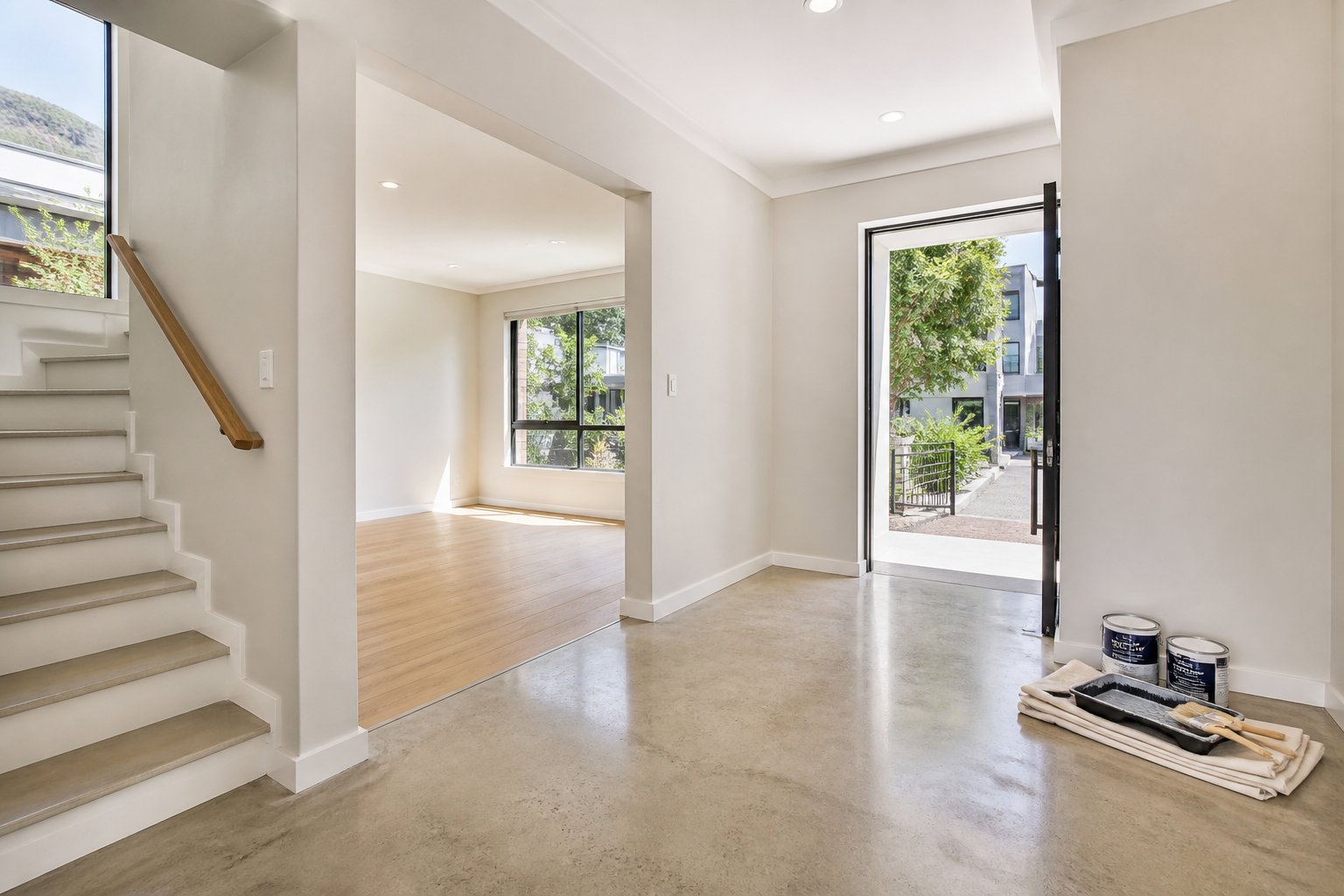
Painting before selling is not about covering every surface with a fresh coat. It is about removing the distractions that make a home feel neglected, dark or difficult to maintain. A focused pre-sale painting plan can present a Cape Town property more consistently while avoiding work that adds little to a buyer’s first impression. The right priorities depend on condition, visibility and the way buyers move through the home.
Start with condition, not personal preference
Walk through the property as if you were viewing it for the first time. Look in daylight and with the lights on. Note stains, peeling paint, scuff marks, patchy touch-ups, hairline cracks, flaking plaster and strong feature colours. Photographs can reveal uneven finishes that become less obvious when you see the rooms every day.
Separate the list into three categories: defects that need investigation, surfaces that need preparation and sound surfaces that only need cosmetic improvement. This matters because paint cannot solve active damp, a leaking roof or unstable plaster. Brown water marks, bubbling coatings, mould and recurring salt deposits should be traced to their cause before repainting. CDC Painters’ damp-proofing service explains the distinction between treating moisture problems and simply recoating their visible symptoms.
Then consider the likely viewing route. The gate, entrance, living area, kitchen, main bedroom and main bathroom generally receive more attention than a low-use storeroom. Prioritise what is clearly visible, damaged or inconsistent rather than repainting every room by default.
Prioritise the entrance and main living spaces
The front door, entrance hall and first living area establish the condition buyers expect elsewhere. Dirty walls, chipped skirtings or a badly marked ceiling can create doubt even when the rest of the home is sound. Clean, well-prepared surfaces make these connected areas feel cared for and help listing photographs read as one coherent space.
In living and dining rooms, focus on large wall planes, ceilings and trim. Patchy attempts to cover marks often look worse than the original scuff because sheen and colour change with age. If marks are widespread, repainting the complete wall or room will usually produce a more even result than numerous isolated touch-ups. An interior painting scope can also include the preparation of cracks, loose coatings and damaged plaster before finish coats are applied.
Do not overlook doors, frames and skirtings. These smaller surfaces sit close to eye level and collect knocks, hand marks and vacuum damage. They may not need repainting if a careful clean restores them, but chipped or yellowed trim beside freshly painted walls will stand out.
Give kitchens and bathrooms a condition-led refresh
Buyers examine kitchens and bathrooms closely because these rooms contain fixed fittings and are associated with maintenance. Painting can improve tired walls and ceilings, but only after grease, soap residue, mould and moisture causes have been addressed. Coatings must be appropriate for the surface and the room’s ventilation and cleaning demands.
In a kitchen, assess the ceiling above cooking areas, the walls around switches and bins, door frames and exposed plaster. Cupboards should not be painted merely because their colour is unfashionable. Cabinet finishes require specific preparation and products; a rushed coating can chip or interfere with hinges and handles. Keep the pre-sale scope focused on surfaces that can be prepared and finished reliably.
In bathrooms, peeling ceiling paint or black mould is a warning rather than a decorating prompt. Check extraction, condensation and possible water entry first. Repainting over contamination without correcting the cause is likely to fail. Sound but tired walls can then be cleaned, prepared and coated to create a consistent finish.
Choose bedrooms according to visibility and wear
The main bedroom normally deserves priority because buyers use it to judge space, light and storage. Repaint if the walls are heavily marked, the ceiling is stained, repaired areas are obvious or a dark colour makes the room difficult to photograph. Secondary bedrooms can often be cleaned and touched up when their coatings are otherwise sound and the colour scheme is neutral.
Children’s rooms and home offices may need more attention where stickers, pin holes, marker stains or furniture rubs are widespread. Remove adhesive carefully, fill holes properly and sand repairs flush. Painting straight over glue or raised filler leaves a visible texture under the new coating.
Colour choice should make the home easier to assess, not erase all character. Warm whites, soft off-whites and restrained neutral shades generally connect adjoining rooms without making an unsupported claim that one colour will increase the sale price. Test samples on more than one wall because Cape Town’s strong daylight, shaded rooms and artificial lighting can change the way a neutral reads.
Assess exterior surfaces from the buyer’s approach
Exterior work can become a much larger project than an interior refresh, so inspect before deciding. Stand at the street, parking area and garden entrance. Look at the front elevation, boundary walls, entrance canopy, garage door, fascias and other prominent surfaces. A buyer may forgive normal weathering more readily than active peeling, open cracks or a front door in poor condition.
The priority is not necessarily a complete exterior repaint. Cleaning a sound coating, repairing local plaster damage and repainting a prominent entrance may be enough. Conversely, widespread chalking, flaking or coating failure needs proper preparation and may justify a broader exterior painting assessment. Cracks should be evaluated rather than hidden; the company’s crack repair and plastering information outlines preparation options for paintable defects. Large, moving or recurring cracks may require specialist assessment.
Roof appearance is highly visible on some Cape Town homes, but do not add roof painting to the scope solely for colour. The roof type, current coating, contamination, access and condition all affect whether coating is appropriate. Review roof painting considerations separately from walls and trim.
Build a practical pre-sale scope and sequence
| Priority | Typical surfaces | Decision test |
|---|---|---|
| Investigate first | Damp patches, mould, bubbling paint, unstable plaster, recurring cracks | Is there an active cause that paint will not fix? |
| High impact | Entrance, living areas, main bedroom, main kitchen and bathroom surfaces | Is it prominent in viewings or listing photographs? |
| Selective improvement | Trim, secondary bedrooms, passages, boundary walls | Will cleaning or a complete-wall repaint give a sound, even result? |
| Defer if sound | Low-use rooms and concealed surfaces | Is the finish intact, clean and reasonably consistent? |
Complete wet repairs and plaster work before painting. Next prepare ceilings and walls, then finish trim and doors so dust and splashes do not damage completed surfaces. Allow enough drying and curing time before cleaners, photographers or movers use the rooms. If the home will remain occupied, plan access room by room and confirm how furniture, floors and fittings will be protected.
Ask for a written scope that distinguishes preparation, repairs, areas to be painted and exclusions. This makes it easier to compare the likely value of each item against the sale timetable. The CDC Painters contact page is the next step for discussing a condition-led scope rather than assuming the entire property needs repainting.
Frequently asked questions
Should I paint the whole house before selling?
Not automatically. Repaint complete areas where coatings are damaged, heavily marked or visually inconsistent. Sound, neutral rooms may only need cleaning and minor preparation. Active damp, unstable plaster and significant cracks should be assessed before cosmetic work begins.
What colour is safest for a pre-sale repaint?
A restrained neutral that works with the floors, fittings and natural light is usually easier for buyers to assess. Test the colour in the actual room and avoid using one stark white everywhere without checking how it responds to shade and artificial light.
Can I paint over damp marks before viewings?
No. A stain-blocking or finish coat may hide a mark briefly without addressing its cause. Identify and correct the moisture source, let the area dry, remove unsound material and use a suitable preparation system before repainting.
Are touch-ups enough for scuffed walls?
They may be if the original paint is available and the coating has not changed colour or sheen. Where touch-ups remain visible in side light, repaint the complete wall to a natural break for a more consistent finish.
More practical interior and property planning guides
Continue with closely related guidance, then review the relevant Cape Town service page.
Discuss your painting requirements
Review CDC Painters services or request a project-specific quotation.